Mediterranean Diet + Calorie Counting: The Smart Combination
The Mediterranean diet has the strongest evidence base of any named eating pattern in the scientific literature. It also has, on its own, one of the weakest weight-loss effects. Those two facts aren't a contradiction — they're the reason pairing Mediterranean food choices with calorie tracking is the smartest combination most people can build.
This is not a romantic post about hilltop villages and long lunches. It's about what to put in your shopping cart, what to leave behind, and how to use a calorie target to turn an excellent food pattern into actual fat loss.
What the Mediterranean Diet Actually Is
Strip away the marketing and you're left with a food list. There is no single "Mediterranean diet" — Greek, southern Italian, Spanish, and Levantine eating patterns all differ — but the overlap is consistent enough that researchers can study it.
The core foods:
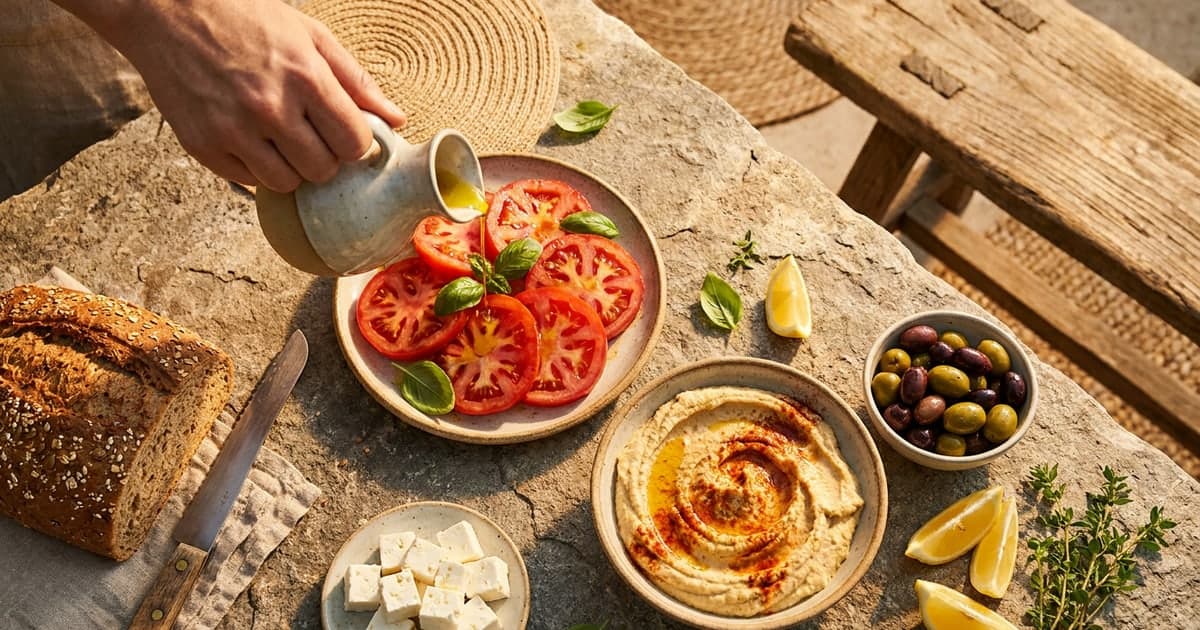
- Extra-virgin olive oil as the primary fat. Typical intake in studies: 2–4 tablespoons per day.
- Vegetables at every meal — 2 to 3 cups daily, often more.
- Fruit daily — 1 to 3 servings, usually whole fruit rather than juice.
- Whole grains in moderation — whole-wheat bread, farro, bulgur, barley, whole-grain pasta. Not unlimited.
- Legumes 3–4 times per week — chickpeas, lentils, white beans, fava.
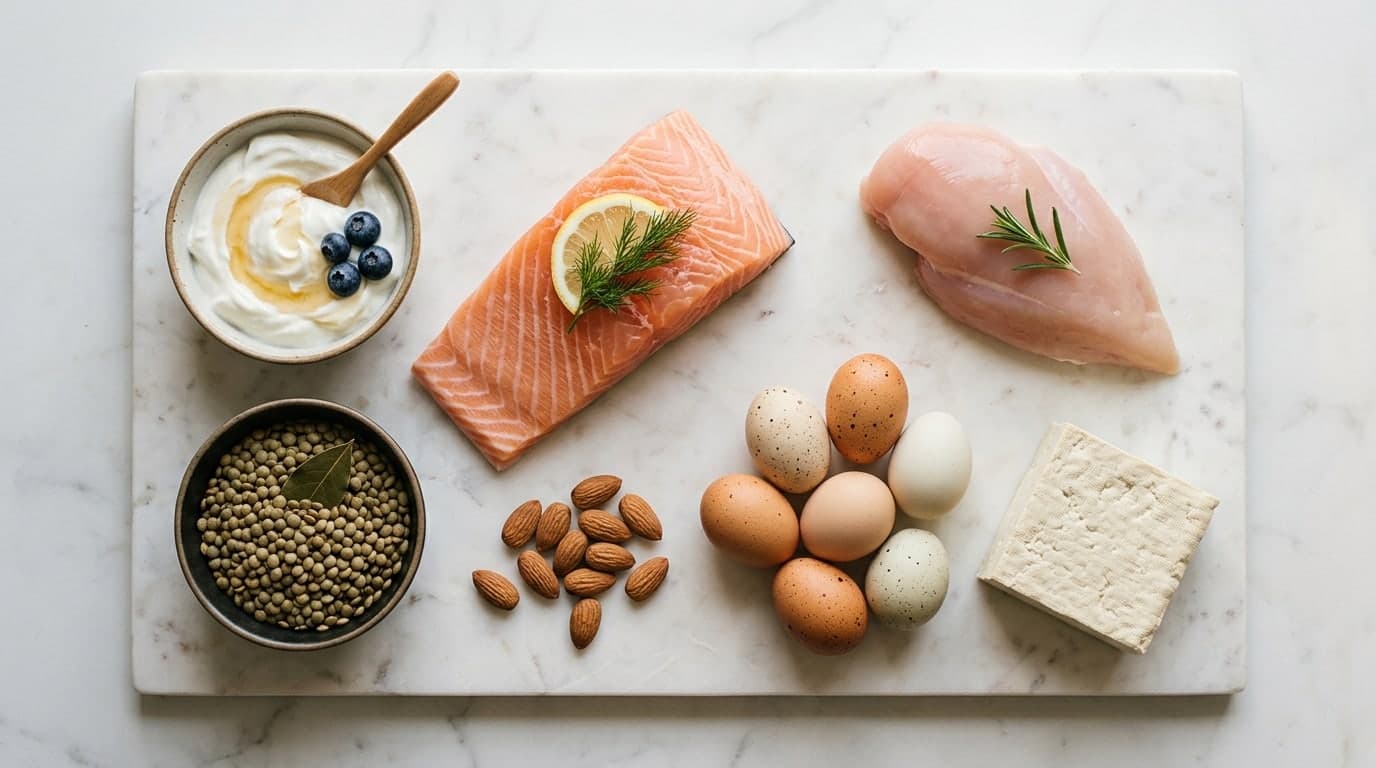
- Fish 2–3 times per week, with an emphasis on small fatty fish (sardines, anchovies, mackerel) and salmon.
- Eggs and dairy in moderation — especially Greek yogurt, feta, kefir.
- Poultry occasionally, red meat rarely (a few times per month at most).
- Nuts daily — a small handful (about 30 g) of almonds, walnuts, or pistachios.
- Herbs and spices doing most of the flavor work instead of salt.
- Water as the default beverage; wine optional and with food.
Notice what's missing: ultra-processed snacks, sugar-sweetened beverages, refined-grain bread as a default, deep-fried foods, processed meats as everyday protein, and bottled sauces engineered for flavor intensity.
The Evidence: Why This Pattern Keeps Winning Trials
The PREDIMED trial is the headline study — a large Spanish randomized controlled trial of around 7,400 people with cardiovascular risk factors, comparing a Mediterranean diet supplemented with either olive oil or mixed nuts to a low-fat control. Major cardiovascular events (heart attack, stroke, cardiovascular death) dropped by roughly 30% in the Mediterranean groups. After methodological concerns were raised, the trial was re-analyzed and republished in 2018 — and the cardiovascular effect held up.
Beyond PREDIMED, Mediterranean-style eating has been linked in observational and clinical research to:
- Lower incidence of type 2 diabetes
- Improved blood lipid profiles
- Better blood pressure control
- Reduced risk of cognitive decline
- Lower all-cause mortality
For weight specifically, the DIRECT trial (Israel, 2008, with later follow-up) compared low-fat, low-carb, and Mediterranean diets head-to-head. The Mediterranean and low-carb groups outperformed low-fat for weight loss over two years, and the Mediterranean group maintained results well during the follow-up period.
The Honest Limitation: Weight Loss Isn't Automatic
If you eat Mediterranean foods ad libitum — meaning, as much as you want — most people lose some weight, but not a lot. A few kilograms over a year is typical in trials where calories aren't restricted. That's because high-quality food still has calories. Olive oil is 120 kcal per tablespoon. Nuts are 180 kcal per ounce. A "small" bowl of pasta with olive oil and parmesan can hit 700 kcal effortlessly.
This is where most "I went Mediterranean and didn't lose weight" stories come from. The pattern improves your health markers and reduces cravings, but it does not enforce a calorie deficit on its own.
The fix is straightforward: keep the food choices, add a calorie target.
Why Mediterranean + Calorie Tracking Works So Well Together
The two approaches solve each other's weaknesses:
| Mediterranean diet alone | Calorie counting alone |
|---|---|
| Excellent food quality | Food quality often ignored |
| Strong cardiovascular evidence | No inherent health protection |
| High satiety per calorie | Low-quality choices erode satiety |
| Weak weight-loss enforcement | Strong weight-loss enforcement |
| Sustainable long-term | Tracking fatigue without structure |
When you eat Mediterranean food, 1,600 to 1,800 kcal fills you up far more than the same calories of typical Western fare. Legumes, vegetables, fish, and whole grains have high fiber, water content, and protein density. Calorie targets that would feel punishing on a fast-food diet feel comfortable here. The work that calorie counting does — creating a measurable deficit — gets easier because the food choices reduce hunger automatically.
If you want the full mechanism behind this, not all calories are equal — and Mediterranean food is one of the cleanest demonstrations of that principle.
A Typical Mediterranean Day at 1,800 kcal
This is a realistic day with macros that work for most adults aiming for moderate weight loss.
| Meal | Foods | Approx. kcal |
|---|---|---|
| Breakfast | Greek yogurt, mixed berries, walnuts, olive oil and honey drizzle | 400 |
| Lunch | Chickpea salad with arugula, cherry tomatoes, feta, olive oil, lemon, whole-grain pita | 550 |
| Snack | Apple + small handful of almonds | 200 |
| Dinner | Grilled salmon, roasted vegetables, farro pilaf with olive oil | 600 |
| Total | 1,750 |
If you want a small glass of red wine with dinner (~120 kcal), trade it against the snack or trim the farro portion to keep the total in range. Tracking is what makes that trade-off visible instead of accidental.
The Weekly Shopping List
Build the cart, the meals build themselves. This list covers roughly a week for one person.
| Section | Items |
|---|---|
| Produce | Spinach, arugula, cherry tomatoes, cucumbers, bell peppers, zucchini, eggplant, broccoli, garlic, lemons, apples, berries, oranges, bananas |
| Pantry | Extra-virgin olive oil, canned chickpeas, dry lentils, canned white beans, farro, bulgur, whole-grain pasta, whole-wheat bread, oats, walnuts, almonds, canned sardines, dried oregano, cumin, paprika |
| Protein | Salmon fillets, eggs, canned anchovies, chicken breast (small amount), tinned tuna in olive oil |
| Dairy | Plain Greek yogurt, feta, small piece of parmesan |
If cost is a concern, this pattern is one of the more affordable ways to eat well — see healthy eating on a budget for how to scale it down further. Canned fish, legumes, and seasonal vegetables do most of the heavy lifting.
What to Actively Cut From a Western Diet
Switching to Mediterranean food without removing the worst offenders gives you marginal results. The high-leverage cuts:
- Sugar-sweetened beverages. Soda, sweetened coffee drinks, energy drinks, most bottled juices.
- Ultra-processed snacks. Chips, packaged baked goods, candy bars, flavored crackers, sweet cereals.
- Deep-fried foods. Industrial seed-oil frying is the antithesis of olive oil cooking.
- Refined grains as the default starch. White bread, white rice, white pasta on rotation.
- Processed meats as everyday protein. Bologna, hot dogs, breakfast sausage, deli ham.
- Bottled dressings and sauces. Often loaded with sugar, seed oils, and a long additive list.
If you want to understand why these foods are specifically problematic — beyond just "they're unhealthy" — read about ultra-processed foods and weight loss and the NOVA classification system researchers use to define them.
Why This Beats Keto for Most People
Keto can produce fast initial weight loss and is a legitimate medical tool in specific contexts. But head-to-head against a Mediterranean approach for the average person trying to lose 10–25 kg and keep it off, Mediterranean has several structural advantages:
- Sustainability. Multi-year adherence rates in trials are higher than for very-low-carb diets.
- Social compatibility. Eating at restaurants, family meals, and travel are vastly easier.
- Cardiovascular evidence. PREDIMED-level data does not exist for keto.
- Less restrictive. Fruit, legumes, and whole grains are off the table on keto. They're staples here.
- Gut microbiome benefits. Fiber from legumes, vegetables, and whole grains feeds beneficial bacteria — keto often reduces this diversity.
If you specifically need rapid initial loss for medical reasons, that's a different conversation. For everyone else, Mediterranean is the lower-friction, better-evidenced default.
Setting Your Calorie Target
Most adults can adopt Mediterranean food choices with a 300–500 kcal daily deficit and lose weight comfortably without hunger or fatigue. Rough starting points:
- Moderately active woman, looking to lose weight: 1,500–1,700 kcal/day
- Moderately active man, looking to lose weight: 1,800–2,100 kcal/day
- Maintenance after target weight: add roughly 300–500 kcal back
Watch the calorie-dense Mediterranean staples specifically: olive oil, nuts, cheese, and whole-grain carbs. These are all healthy, but they're easy to over-pour. A "drizzle" of olive oil is often three tablespoons (360 kcal). A "handful" of almonds is often 50 grams (290 kcal). Tracking catches these accurately within the first week and recalibrates your eyeballing for the rest of your life.
How Calzy's Health Score Reinforces This Automatically
If you're using a tracker, look for one that scores food quality, not just calories. Calzy's Health Score (A through E) is built around exactly the variables that define Mediterranean eating: minimally processed ingredients, high fiber, whole-food fats like olive oil and nuts, fatty fish, legumes, vegetables, and minimal additives.
What that looks like in practice:
- A bowl of lentil soup with olive oil and whole-grain bread tends to score A or B.
- Grilled salmon with roasted vegetables and farro: A.
- Greek yogurt with berries and walnuts: A.
- Packaged "Mediterranean-style" ready meal with a 22-ingredient label: often C or D.
- Deep-fried fast food, sweetened beverages, processed snacks: D or E.
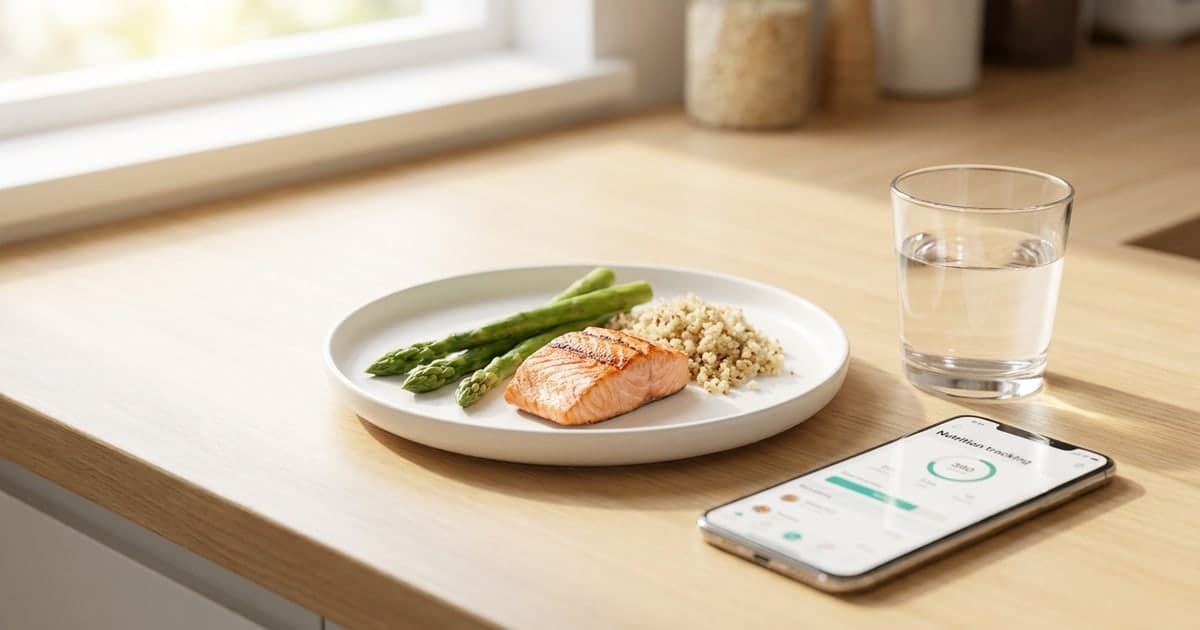
You take a photo, the AI recognizes the food in about three seconds, and you see both the calorie count and the Health Score side by side. The score reinforces the food-quality side automatically — and the calorie count enforces the deficit. Both jobs covered.
The 2-Week Starter Plan
Don't try to overhaul everything at once. The pattern works because it sticks. Build it in stages.
Week 1: Foundation swaps
- Replace butter, margarine, vegetable oil, and bottled dressings with extra-virgin olive oil for cooking and finishing.
- Add at least one vegetable to every dinner — roasted, sauteed, or in a side salad.
- Eat fish twice this week. Canned sardines on whole-grain toast counts.
- Drink water as your default. Coffee and tea fine; skip the sweetened drinks.
Week 2: Build the rhythm
- Make one legume-based meal per day — lentil soup, hummus with vegetables, chickpea salad, white bean stew.
- Replace at least one refined-grain meal with a whole-grain alternative (whole-wheat pasta, farro, bulgur).
- Start your day with Greek yogurt + fruit + nuts most mornings.
- Set your calorie target and start tracking — pay particular attention to olive oil, nuts, and cheese portions.
After two weeks, the food shopping is on autopilot, the meals are quick to assemble, and the calorie target stops requiring conscious effort. That's when the combination starts paying off — not just on the scale, but in blood markers, energy, and how you feel after meals.
The Bottom Line
The Mediterranean diet gives you the best-evidenced food pattern in nutrition. Calorie tracking gives you a measurable lever for weight change. Used together, they cover what each does poorly alone. You get cardiovascular protection, blood-sugar stability, high-fiber satiety, and a sustainable framework — plus the accountability that turns "healthier eating" into actual weight loss.
The food list is short. The shopping cart is simple. The deficit is small. Two weeks in, this stops feeling like a diet and starts feeling like the way you eat.
Ready to track smarter?
Snap a photo, get your calories, macros, and Health Score instantly. See what other trackers miss.
Download Calzy — It's Free