NOVA Classification: How Processed Is Your Food, Actually?
For decades, nutrition advice focused on macronutrients — fat, carbs, protein — and the calorie content of foods. Two recent shifts in research suggest a different lens is more useful: how processed the food is, regardless of macros. The framework that codified this is NOVA classification, developed by researchers at the University of São Paulo in 2009 and now used in studies worldwide.
The four NOVA groups
NOVA divides every food into one of four categories based on the extent and purpose of industrial processing.
NOVA 1 — Unprocessed or minimally processed
Whole foods that are essentially as nature produced them, possibly cleaned, refrigerated, or vacuum-packed. The "if your great-grandmother would recognize it" category.
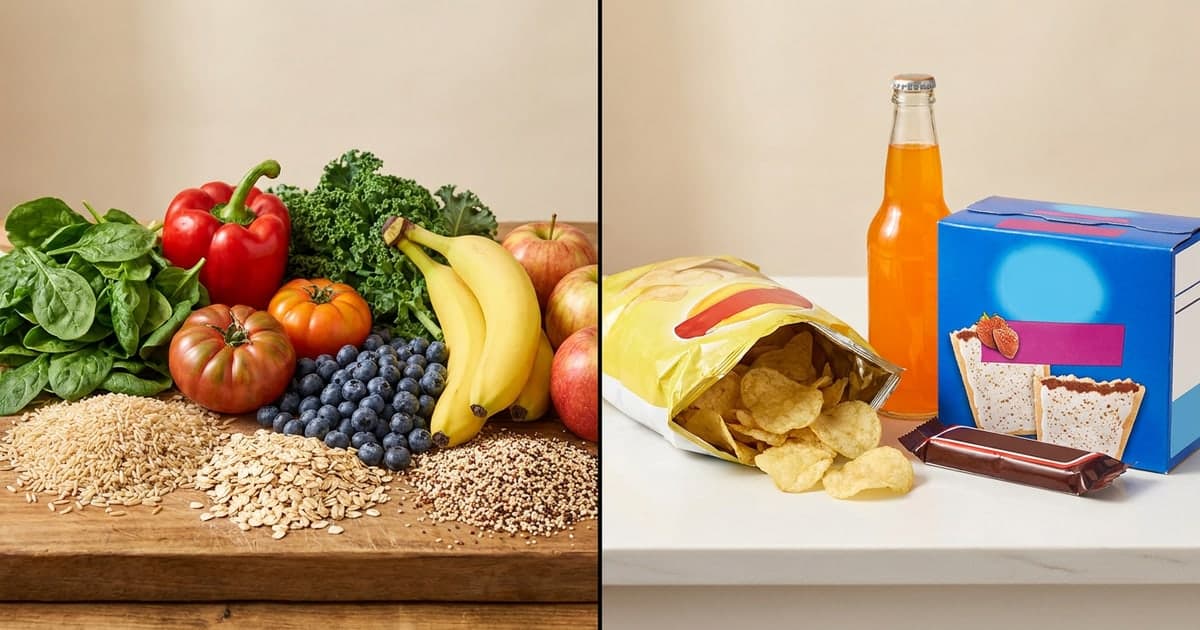
Examples: fresh vegetables, fresh fruit, raw meat, fresh fish, eggs, milk, yogurt (plain), legumes, whole grains, nuts, seeds, coffee, tea.
NOVA 2 — Processed culinary ingredients
Substances extracted from NOVA 1 foods, used in home cooking. Not eaten alone, but used to season and prepare other foods.
Examples: olive oil, butter, salt, sugar, honey, maple syrup, vinegar, dried herbs.
NOVA 3 — Processed foods
NOVA 1 foods preserved or modified by simple methods that don't fundamentally change their structure. Usually two or three ingredients.
Examples: canned vegetables (vegetable + salt + water), canned beans, freshly baked bread (flour + water + yeast + salt), simple cheeses, smoked fish, salted nuts, fruit preserved in syrup.
NOVA 4 — Ultra-processed foods
Industrial formulations made mostly or entirely from substances derived from foods, plus additives. Recognizable food ingredients are often a minority of the formulation.
Markers of NOVA 4:
- Long ingredient lists (often 10+ items)
- Many items unrecognizable as food
- Multiple cosmetic additives (colors, flavors, emulsifiers, sweeteners)
- "Cracking and recombination" — corn becomes high-fructose corn syrup, becomes a sweetener in soda
- Designed for hyperpalatability and shelf life
Examples: soft drinks, packaged snacks (chips, cookies, candy bars), processed meats (hot dogs, sausages, deli meats), instant noodles, breakfast cereals (most), packaged breads with emulsifiers, ready meals, mass-produced ice cream, "infant formula" beverages, energy drinks, most fast food.
Why NOVA matters more than macros
Multiple large studies have found ultra-processed food consumption is independently associated with weight gain and disease — after controlling for calories, fat, sugar, and salt. The processing level is doing something the macros don't capture.
A 2019 NIH-led randomized trial put participants on either an ultra-processed or unprocessed diet matched for calories, sugar, fat, sodium, and fiber. The ultra-processed group ate 500 calories per day more on average, despite having access to the same calories on offer, and gained 0.9 kg over two weeks. The unprocessed group lost 0.9 kg over the same period.
That trial suggests ultra-processed food drives overconsumption — not because it has more calories per gram (sometimes it doesn't), but because the processing changes how the food interacts with satiety, brain reward, and meal pacing.
What changes with processing
Several mechanisms appear to be at play:
1. Eating speed. Ultra-processed foods are softer, lower in fiber, and faster to chew. People eat them 20–40 percent faster than unprocessed equivalents. Faster eating bypasses the 20-minute satiety window.
2. Reward density. Industrial formulations combine fat + sugar + salt at concentrations that don't occur in nature. The "bliss point" formulation triggers more reward signaling per bite, encouraging continued eating beyond fullness.
3. Satiety mismatch. The fiber, water, and protein that signal "you're full" are often stripped out in ultra-processed formulations. Calorie density goes up; satiety per calorie goes down.
4. Microbiome impact. Many emulsifiers and additives in ultra-processed foods change gut microbiome composition in animal models, with downstream effects on metabolism and inflammation.
5. Insulin response. Refined carbohydrates spike blood glucose harder than whole-food carbs. Repeated spikes drive insulin resistance over years.
The macros tell you the food's energy and protein content. The processing level tells you how the food behaves inside you.
The 80/20 heuristic
You don't have to eliminate ultra-processed food. Doing so is impractical for most modern lifestyles, and a small amount of ultra-processed food in an otherwise solid diet has minimal impact.
The evidence-backed target: ultra-processed food at 20 percent or less of total calories. Most healthy populations historically ate close to zero NOVA 4. Modern average intake in the US and UK is ~55 percent — high enough to drive most of the diet-related disease epidemic.
A reasonable plate, by NOVA category:
- 60 percent NOVA 1 (whole foods)
- 15 percent NOVA 2 (cooking fats, salt, sugar in moderation)
- 15 percent NOVA 3 (processed but recognizable foods)
- 10 percent NOVA 4 (occasional treats, convenience products)
That structure aligns with longest-living populations worldwide.
Practical NOVA 4 swaps
Most people can cut their ultra-processed food intake by half without noticing taste. The biggest leverage:
| Current | Swap |
|---|---|
| Breakfast cereal (NOVA 4) | Oats + fruit + nuts (NOVA 1+1+1) |
| Packaged sandwich bread (often NOVA 4 with emulsifiers) | Bakery loaf or whole-grain (NOVA 3) |
| Flavored yogurt (NOVA 4 with sweeteners + colors) | Plain Greek yogurt + fresh fruit (NOVA 1+1) |
| Deli meat / hot dogs (NOVA 4) | Roast chicken, fresh meat (NOVA 1) |
| Soda (NOVA 4) | Sparkling water + lemon (NOVA 1) |
| Instant noodles (NOVA 4) | Whole-grain pasta + olive oil + parmesan (NOVA 3+2+3) |
| Packaged snack bars | Fresh fruit + nuts (NOVA 1+1) |
| Salad dressing (often NOVA 4) | Olive oil + vinegar + mustard (NOVA 2+2+3) |
How to identify NOVA 4 in three seconds
When picking up a packaged product, scan the ingredient list:
- Length. Five or fewer = probably NOVA 1–3. Twenty+ = almost certainly NOVA 4.
- Recognizability. If you can't picture each ingredient as a food, the food is ultra-processed.
- Cosmetic additives. Colors, flavors, sweeteners, emulsifiers, stabilizers — multiple of these is NOVA 4.
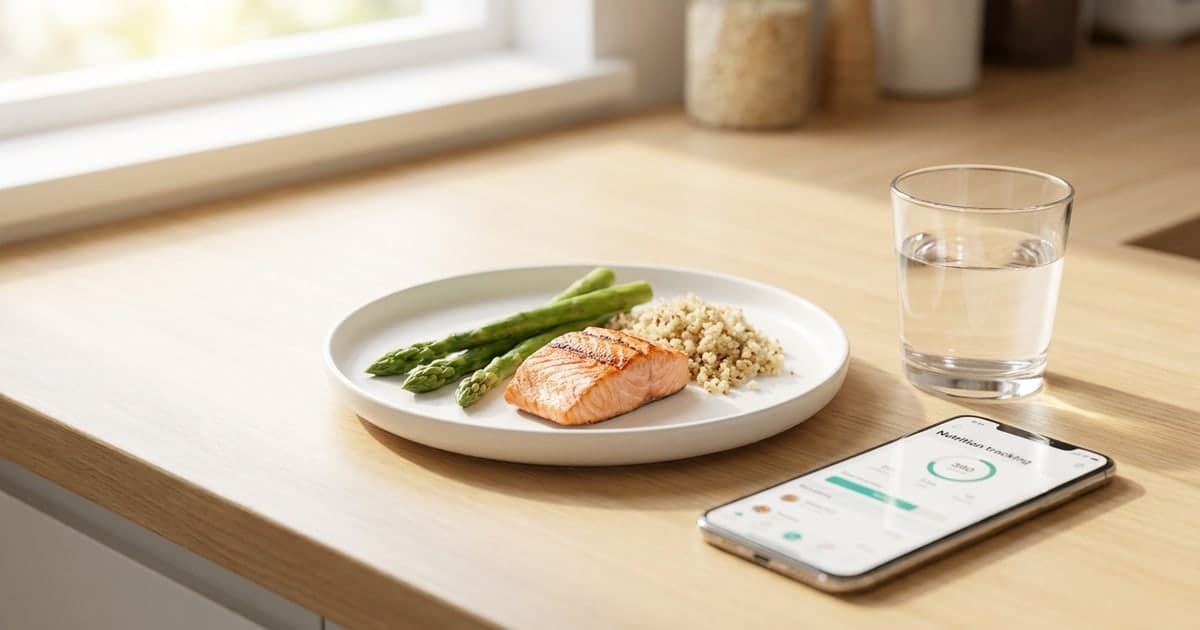
A modern food tracker automates this. Calsy classifies every meal you log by NOVA level and shows the percentage of ultra-processed calories in your week. The number tends to surprise people. A "balanced diet" in modern grocery culture often comes out at 50–60 percent NOVA 4 unless you're paying attention.
The bottom line
If you only changed one thing about your diet for the rest of your life, shifting from 50 percent ultra-processed to 20 percent ultra-processed would deliver more measurable health improvement than counting macros, going keto, going vegan, or any other popular dietary intervention.
Calorie tracking and NOVA tracking are complementary, not competing. Calories control whether you lose weight. NOVA controls whether you feel good while doing it, what your body composition looks like at the end, and whether the changes hold long term.
What to do this week
- Audit one week of meals for NOVA category. Be honest about how much is NOVA 4.
- Pick three NOVA 4 items you eat most often. Find an NOVA 1–3 swap for each.
- Keep ultra-processed food at 20 percent or less of total calories long term.
- Use a tracker that flags NOVA level automatically — manual classification gets old fast.
Process matters. Macros matter. Calories matter. The order is something like: calories first, processing level second, macros third. Get the first two right and the third becomes optional.
Ready to track smarter?
Snap a photo, get your calories, macros, and Health Score instantly. See what other trackers miss.
Download Calsy — It's Free