Healthy Eating on a Budget — Without the Pinterest Sermon
The conventional wisdom is that healthy eating is expensive. The reality is that a calorie-aware, protein-focused diet from cheap staples beats both fast food and supermarket "health food" on cost — usually by 30–50 percent. Below is the framework, a real shopping list, and the meal templates that actually save money.
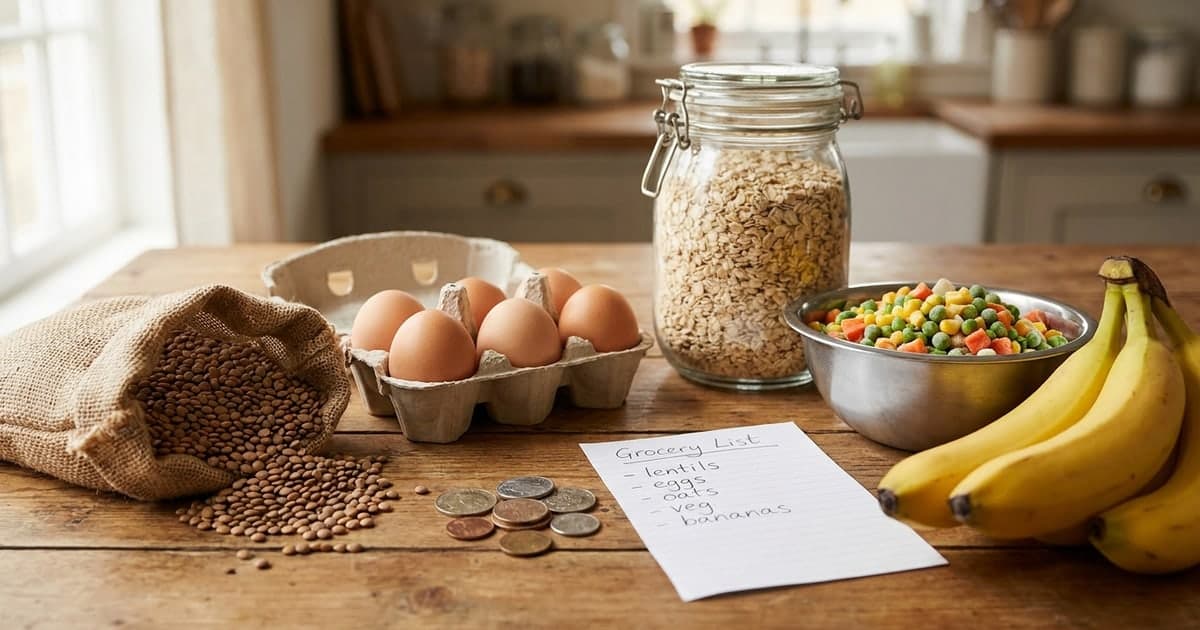
The baseline shopping list
For one person, ~$45–55 USD per week, ~$10/day. Adjust regional pricing accordingly.
Protein staples
| Item | Approximate cost | Protein per serving |
|---|---|---|
| Chicken thighs (boneless, skinless), 1 kg | $7–9 | 27 g per 100 g |
| Whole eggs, 12 ct | $3–4 | 6 g per egg |
| Greek yogurt (plain), 1 kg | $5–7 | 100 g per kg |
| Canned tuna, 4 cans | $4–6 | 25 g per can |
| Lentils (dry), 500 g | $2–3 | 9 g per 100 g cooked |
| Cottage cheese, 500 g | $3–4 | 60 g per 500 g |
Total protein bucket: ~$24–33/week. Provides ~600 g protein over the week.
Carb staples
| Item | Approximate cost |
|---|---|
| Brown rice (1 kg) | $2–3 |
| Oats (1 kg) | $2–3 |
| Whole-grain pasta (500 g) | $2 |
| Sweet potatoes (1 kg) | $2–3 |
| Bananas (6 ct) | $1.50 |
| Apples (6 ct) | $3–4 |
Total carb bucket: ~$13–17/week.
Vegetables and fats
| Item | Approximate cost |
|---|---|
| Frozen mixed vegetables (1 kg) | $3–4 |
| Onions, garlic, carrots (1 kg) | $3 |
| Spinach or salad greens (200 g) | $2–3 |
| Olive oil (250 ml) | $4–5 |
| Peanut butter (500 g) | $4–5 |
Total vegetables/fats bucket: ~$16–20/week.
Aromatics and seasonings (one-time, lasts months)
Salt, pepper, paprika, cumin, oregano, soy sauce, vinegar, mustard. ~$15–20 spread over 2–3 months.
Grand total
~$53/week for a 7-day, ~2,000 kcal/day diet with 130–150 g protein/day. That's $7.50/day, beats every fast food chain on cost, and produces measurably better outcomes.
What's not on the list (and why)
Skipping these saves the most money:
- Avocados. $2 each. Not bad, but expensive per calorie.
- "Superfood" powders. $30/bag, mostly marketing.
- Berries (fresh). $5/cup. Use frozen for half the price.
- Salmon (fresh). $25/kg. Use canned tuna and sardines for omega-3.
- Almonds (raw). $15/kg. Replace with peanuts ($5/kg) for similar nutrition.
- Pre-prepped salad bags. $5 for 200 g. Buy whole heads of lettuce.
- Branded protein bars. $3 each. Make your own or use whey + oats.
- Quinoa. $10/kg. Brown rice has 90 percent of the nutritional value at 25 percent of the cost.
The 4 meal templates that handle every day
Master these and you can riff for years without buying anything new.
Template 1: protein bowl
- Base: brown rice or sweet potato
- Protein: chicken thighs, lentils, or eggs
- Vegetable: frozen mix or fresh spinach
- Sauce: olive oil + soy sauce + vinegar + garlic
Cost: ~$2.50. Calories: 500–700. Protein: 35–45 g.
Template 2: oat breakfast
- Base: 80 g oats with water or milk
- Protein: Greek yogurt or whey shake
- Topping: banana + peanut butter + cinnamon
Cost: ~$1.50. Calories: 500–600. Protein: 30 g.
Template 3: tuna pasta
- Base: 100 g whole-grain pasta
- Protein: 1 can tuna
- Vegetable: spinach + frozen peas
- Sauce: olive oil + lemon + garlic
Cost: ~$2. Calories: 600–700. Protein: 40 g.
Template 4: lentil + egg
- Base: 200 g cooked lentils
- Protein: 2 fried eggs
- Vegetable: tomatoes, onions, spices
- Topping: yogurt + paprika
Cost: ~$1.50. Calories: 500–600. Protein: 30 g.
The meal-prep system
Cook 3 things on Sunday for the entire week. ~90 minutes of work.
- Roast a tray of chicken thighs (1 kg). Salt, pepper, paprika, olive oil, 200°C, 30 min. Stores 4 days; portion into containers.
- Cook a pot of brown rice (3 cups dry → 9 cups cooked). 45 min, mostly hands-off. Stores 5 days.
- Boil a dozen eggs. 12 min. Peel and store. Stores 7 days.
- Pre-cut a tray of vegetables (peppers, carrots, broccoli). Stores raw 5 days.
Mix and match for the week. Most weekday lunches are now: rice + chicken + vegetables + olive oil drizzle. Most weekday breakfasts are: oats + yogurt + banana, or eggs + toast.
Where to spend up
Two categories where premium prices buy real benefit:
- Olive oil. Cheap olive oil is often adulterated with seed oils. A mid-range single-origin olive oil ($10–15) is genuinely better.
- Eggs. Pasture-raised eggs have measurably more omega-3 and vitamin D. ~50 percent more expensive but a real upgrade.
Most other "premium" food is marketing.
What about supplements?
A reasonable, evidence-based supplement stack on a budget:
- Whey protein — $30/month, 30 servings. Useful if hitting protein from food alone is hard.
- Creatine monohydrate — $15/month. Most evidence-backed sports supplement; $0.50/day for the unflavored kind.
- Vitamin D3 — $5/month. Most people with limited sun exposure are deficient.
- Omega-3 (algae or fish oil) — $10/month if you don't eat fatty fish 2x/week.
Total: $60/month for the basics. Skip the rest unless a blood test indicates a specific deficiency.
What to buy at each store
Maximize per-dollar value by where you shop:
- Discount supermarket (Aldi, Lidl, Walmart): staples — rice, oats, pasta, beans, frozen vegetables, eggs, olive oil.
- Asian supermarket: cheap soy sauce, spices, jasmine rice, frozen dumplings (occasional treat), green onions, chicken thighs.
- Wholesale club (Costco, Sam's): bulk Greek yogurt, big eggs, salmon, peanut butter, large olive oil.
- Local market or farm shop: vegetables in season, fresh herbs, eggs.
Avoid: gourmet supermarkets for staples (they mark up 30–40 percent), convenience stores (50–80 percent markup), specialty health food stores for anything non-specialty.
What to do this week
- Buy the staples list ($45–55).
- Sunday meal prep: chicken, rice, eggs, vegetables.
- Use the 4 meal templates to fill the week.
- Track spend for one month. Most readers find they spend less than they did before, with much better outcomes.
The "healthy food is expensive" narrative survives because branded health food is expensive. Whole staples — beans, oats, rice, chicken, eggs, frozen vegetables, olive oil — are the cheapest food in the supermarket, and the same building blocks every nutritionist eats. The Pinterest version of healthy eating is not how healthy eaters actually eat.
Ready to track smarter?
Snap a photo, get your calories, macros, and Health Score instantly. See what other trackers miss.
Download Calsy — It's Free