Sueno y Perdida de Peso: La Conexion Subestimada
En ensayos con deficit calorico igualado, el grupo con sueno restringido consistentemente pierde mas masa magra y menos grasa que el grupo bien descansado. Mismas calorias, misma proteina, mismo entrenamiento — resultado de composicion corporal muy diferente. El sueno no es un accesorio de bienestar para un protocolo de perdida de grasa. Es parte del protocolo.
El ensayo que cambio como los investigadores piensan sobre los cortes
Un estudio cruzado emblematico de 2010 puso a adultos con sobrepeso en un deficit calorico moderado identico bajo dos condiciones: 8.5 horas en cama versus 5.5 horas en cama por dos semanas cada una. La perdida de peso total fue similar entre las condiciones. La composicion de esa perdida no lo fue.
En la condicion de sueno corto, aproximadamente el 80% del peso perdido vino de tejido magro — musculo, agua, masa de organos. En la condicion de sueno adecuado, la proporcion se invirtio: la mayor parte de la perdida vino de la grasa. Ensayos posteriores han replicado la direccion del efecto, con variacion en la magnitud. El mecanismo ya no es controvertido. La restriccion de sueno en deficit redirige el uso de sustrato lejos de la grasa y hacia la descomposicion de proteina.
Esto importa porque el punto completo de un corte es perder grasa y mantener musculo. Un dieter con restriccion de sueno esta haciendo la parte dificil de la restriccion calorica mientras sabotea el resultado que quiere.
Hormonas del hambre: leptina abajo, grelina arriba
Dos hormonas dominan la regulacion del apetito. La leptina es secretada por el tejido graso y senala saciedad. La grelina es secretada por el estomago y senala hambre.
A traves de la literatura publicada, dormir 4-5 horas en lugar de 8 produce un patron reproducible en dias:
- La leptina cae aproximadamente 15-20%
- La grelina sube aproximadamente 20-30%
- El hambre auto-reportada aumenta, particularmente por alimentos altos en carbohidratos y grasas
- La ingesta calorica bajo condiciones ad libitum aumenta en 250-400 kcal/dia
Esto no es un fracaso de fuerza de voluntad. Es un cambio bioquimico medible hacia comer mas. Una persona en un deficit de 500 calorias que duerme poco puede sin saberlo cerrar la mayor parte de ese deficit a traves de ingesta compensatoria, luego culparse a si misma cuando la balanza no se mueve.
El mecanismo de toma de decisiones
La historia de las hormonas del hambre es solo la mitad del panorama. La otra mitad es neurologica. Trabajos de fMRI de principios de los 2010 documentaron dos hallazgos consistentes en adultos privados de sueno:
- Actividad reducida en la corteza prefrontal — la region responsable del control inhibitorio, planificacion y toma de decisiones a largo plazo
- Actividad elevada en los circuitos de recompensa (amigdala, estriado) cuando se muestran imagenes de alimentos densos en calorias
En terminos simples: bajo privacion de sueno, el freno se debilita y el acelerador se fortalece. Quieres mas comida hiperpalatable, y tienes menos maquinaria neural disponible para decir no. Esta es la razon por la que la dona de la oficina es mas dificil de rechazar despues de una mala noche, y por que la gente fracasa en el conteo de calorias en puntos predecibles — usualmente las noches de semanas mal dormidas.
La sensibilidad a la insulina colapsa mas rapido de lo que la gente espera
Una serie de estudios cuidadosamente controlados ha mostrado que incluso 4-5 noches de restriccion parcial de sueno (4 horas por noche) reducen la sensibilidad a la insulina de todo el cuerpo en 20% o mas en adultos jovenes saludables. El efecto es lo suficientemente grande para empujar marcadores metabolicos a un rango prediabetico.
La buena noticia es que el cambio es ampliamente reversible. Dos a tres noches de sueno de recuperacion restauran la sensibilidad a la insulina en la mayoria de los participantes. La mala noticia es que los que duermen poco cronicamente — los millones de adultos promediando 5-6 horas en dias laborales — viven en un estado de senalizacion de insulina levemente suprimida. En un contexto de perdida de grasa, menor sensibilidad a la insulina significa peor particion de nutrientes, oscilaciones mas agresivas de glucosa en sangre, y antojos mas fuertes de carbohidratos en la tarde y noche.
Cortisol, grasa abdominal y perdida muscular
La restriccion cronica de sueno eleva el cortisol vespertino y aplana el ritmo normal de cortisol. El patron diurno deberia ser alto en la manana, cayendo durante el dia, bajo en la noche. Los que duermen poco tienden a lo opuesto: aumento matutino amortiguado, pico vespertino elevado.
El cortisol vespertino sostenido tiene dos efectos relevantes:
- Preserva la grasa visceral y abdominal preferentemente
- Aumenta la proteolisis — la descomposicion de musculo como sustrato
Esta es la razon bioquimica por la que los que duermen poco en deficit pierden musculo. El cortisol esta haciendo el trabajo catabolico que se suponia que la dieta dirigiera hacia la grasa. Incluso la ingesta adecuada de proteina (1.6-2.2 g/kg) no puede compensar completamente la senalizacion catabolica cronicamente elevada.
NEAT: el comedor invisible del deficit
La Termogenesis por Actividad No-Ejercicio — moverse, caminar, subir escaleras, estar de pie, gesticular — representa 100-800 kcal/dia en adultos delgados y varia enormemente entre individuos. Tambien es el componente mas plastico del gasto energetico.
Las personas cansadas se mueven menos. Toman el elevador. Se sientan mas tiempo. Conducen en lugar de caminar. Cancelan planes nocturnos. Estudios con podometro en adultos transicionados a sueno corto muestran que el NEAT puede caer 200-400 kcal/dia dentro de una semana de restriccion. El participante no siente que esta haciendo nada diferente. Simplemente esta menos espontaneamente activo.
Para un dieter apuntando a un deficit diario de 500 calorias, una caida de 300 calorias en NEAT corta el deficit a la mitad antes de cualquier cambio en la alimentacion. Esta es una razon silenciosa y comun por la que los cortes se estancan en adultos ocupados o privados de sueno. La matematica se ha desplazado bajo ellos. Si sospechas que esto esta sucediendo, el marco en resolucion de problemas de deficit calorico comienza con auditorias de sueno y actividad antes de mas recortes de comida.
El marco "calorias entran, calorias salen, sueno"
La ecuacion convencional de balance energetico esta incompleta. La version honesta dice:
Perdida de grasa = (Calorias entran) - (Calorias salen, incluyendo NEAT) - (Efectos mediados por el sueno en composicion, hambre y adherencia)
El sueno es la tercera variable a menudo perdida. Dos personas corriendo deficits identicos de 500 calorias — una durmiendo 5 horas, una durmiendo 8 — llegaran a lugares diferentes despues de 12 semanas. La bien descansada habra perdido mas grasa, mantenido mas musculo, encontrado la dieta mas facil, y se habra quedado con ella.
| Duracion del sueno | Hormonas del hambre | Sensibilidad a la insulina | Masa magra durante deficit | Probabilidad de adherencia |
|---|---|---|---|---|
| 8+ horas | Leptina/grelina balanceadas | Normal | Preservada | Alta |
| 7-8 horas | Casi normal | Normal | Preservada | Alta |
| 6-7 horas | Aumento leve de grelina | Ligeramente reducida | Mayormente preservada | Moderada |
| 5-6 horas | Leptina abajo ~15%, grelina arriba ~20% | Reduccion del 10-15% | Perdida modesta | Mas baja |
| Menos de 5 horas | Leptina abajo ~20%, grelina arriba ~30% | Reduccion del 20%+ | Perdida sustancial | Baja |
Un meta-analisis de 2024 sobre adherencia a la dieta reforzo lo que el mecanismo predice: los participantes promediando 7+ horas de sueno fueron significativamente mas propensos a completar una intervencion de perdida de grasa de 12 semanas que aquellos promediando menos de 6 horas. El abandono no fue aleatorio. Los que dormian poco abandonaron a una tasa mas alta, mas temprano, con resultados mas pequenos.
Por que "solo duerme mas" raramente funciona
Decirle a alguien con deficit de sueno que duerma mas es aproximadamente tan efectivo como decirle a alguien en deficit que "solo coma menos". El comportamiento es el objetivo, no la palanca. La palanca son las condiciones bajo las cuales el comportamiento se vuelve posible.
Algunos principios de la medicina del sueno:
- La hora de despertar es mas poderosa que la hora de dormir. Una hora de despertar fija ancla el sistema circadiano. La hora de dormir se desvia; la hora de despertar no deberia.
- La exposicion a la luz en la primera hora despues de despertar adelanta el reloj corporal y mejora la profundidad del sueno esa noche. La luz exterior le gana a cualquier lampara interior.
- La cafeina tiene una vida media de 5-6 horas en la mayoria de los adultos. Un cafe de la tarde a las 3 p.m. todavia tiene cafeina significativa en el sistema a las 11 p.m.
- El alcohol aplasta el sueno REM incluso en dosis modestas. Una bebida con la cena produce disrupcion medible de la arquitectura del sueno seis horas despues.
- La temperatura corporal debe caer para iniciar y mantener el sueno. Un cuarto fresco ayuda mas que uno calido.
Marco practico de higiene del sueno
Lo siguiente es lo que la evidencia respalda como un protocolo de efectividad minima. Elige los que no haces ya.
- Fija tu hora de despertar. Misma hora, siete dias a la semana, incluyendo fines de semana. Apunta a una ventana de 30 minutos. Esta es la intervencion individual de mayor apalancamiento.
- Limite de cafeina al menos 8 horas antes de dormir. Para una hora de dormir a las 11 p.m., el ultimo cafe es a las 3 p.m. Si eres sensible al sueno, empujalo a la 1 p.m.
- No alcohol dentro de 3 horas antes de dormir. Mejor: limita a 1-2 bebidas total y termina en la cena. El "trago para dormir" es una de las intervenciones de sueno mas sobrevaloradas de la historia.
- Iluminacion tenue en los ultimos 90 minutos. Apaga las luces de techo. Usa una lampara de tono calido. La senal al sistema circadiano importa mas que el nivel absoluto de luz.
- Habitacion fresca: 16-19°C (60-67°F). Mas fresca de lo que la mayoria mantiene su habitacion. La ropa de cama puede ser calida; el aire ambiental no deberia.
- Ventana sin pantallas de 30-60 minutos, o usa modo de turno de noche. La luz es un problema; la estimulacion dopaminergica de los feeds y juegos es el mas grande.
- Cambio gradual, no heroico. Mueve la hora de dormir 15 minutos antes por semana hasta llegar a 7.5-8 horas. Intentar un salto de 90 minutos falla casi universalmente.
La regla de decision para cortes estancados
Si tu perdida de grasa se ha estancado y estas promediando menos de 7 horas de sueno, no recortes calorias mas. Arregla el sueno primero. Agregar mas restriccion a un sistema poco descansado acelera la perdida muscular y empeora la adherencia sin mejorar la perdida de grasa.
El orden de operaciones para un corte estancado deberia ser:
- Audita el sueno. Duracion promedio en las ultimas dos semanas. Consistencia de la hora de despertar. Recuperacion subjetiva.
- Audita el NEAT. Tendencia de conteo de pasos. Te estas moviendo menos de lo que lo hacias hace dos meses?
- Audita la precision del rastreo. Las calorias ocultas en alimentos cotidianos rutinariamente agregan 200-400 calorias no rastreadas por dia.
- Luego, y solo entonces, considera reduccion calorica adicional.
La mayoria de los estancamientos viven en los pasos 1-3. El instinto de recortar calorias mas duro es el movimiento incorrecto primero.
Una nota sobre el rastreo
Rastrear calorias sin rastrear sueno es optimizar la variable equivocada en aislamiento. Las intervenciones interactuan. Una app de dieta que captura tu comida pero no te dice nada sobre por que tu hambre se disparo el martes esta perdiendo la mitad de la ecuacion.
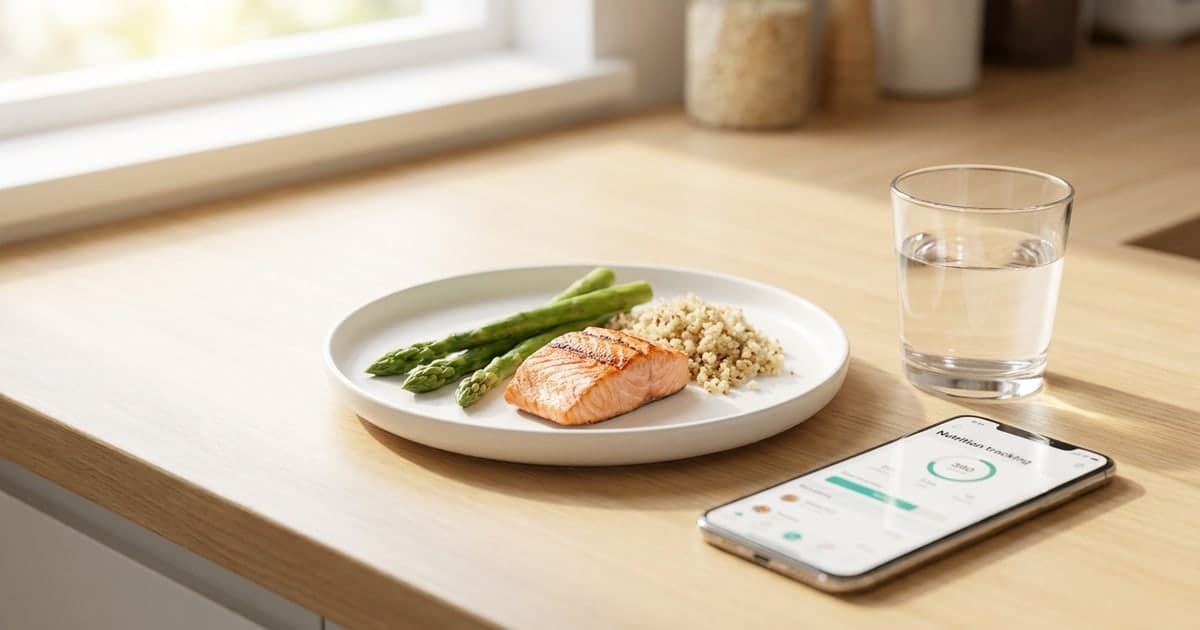
Dicho eso, rastrear calorias sigue siendo significativamente mejor que no rastrearlas. La conciencia de la ingesta sigue siendo la base. El reconocimiento de fotos de Calzy existe para hacer esa base lo suficientemente baja en friccion como para que realmente la mantengas — tres segundos por comida, el Health Score y la deteccion de aditivos en el plan gratuito — para que el ancho de banda cognitivo que liberas pueda ir a las otras variables que importan. El sueno siendo la mas grande de ellas.
La conclusion final
La literatura de perdida de grasa paso dos decadas tratando el sueno como una variable suave, una recomendacion de bienestar junto con la hidratacion y el manejo del estres. La evidencia mecanicista y clinica de los ultimos quince anos lo ha movido firmemente a la categoria de palancas primarias — comparable en magnitud a la ingesta de proteina o la adherencia al entrenamiento.
Un corte sin un objetivo de sueno es un protocolo incompleto. Establece el objetivo en 7.5 horas, construye las condiciones que lo hagan alcanzable, y observa como el resto de la dieta se vuelve mas facil.
¿Listo para rastrear de forma más inteligente?
Toma una foto y obtén al instante calorías, macros y tu Health Score. Descubre lo que otros trackers pasan por alto.
Descarga Calzy — es gratis