Why 90% of People Quit Calorie Counting (And How to Be the Exception)
The Two-Week Wall
Almost everyone who starts counting calories quits. Research suggests that the average person abandons food tracking within two weeks. Some studies put the dropout rate as high as 90% within the first month.
This is not because calorie counting does not work. The science behind energy balance is solid. The problem is that most people approach calorie counting in a way that is unsustainable, frustrating, and ultimately counterproductive.
If you understand why most people fail, you can avoid the same traps. Here is what actually goes wrong and how to fix it.
Reason 1: It Takes Too Long
This is the number one killer. Traditional calorie counting requires you to:
- Search through a database of thousands of foods
- Select the exact brand and variety
- Estimate or measure your portion size
- Manually enter each ingredient for home-cooked meals
- Repeat this process for every single thing you eat
The average meal takes 3-5 minutes to log manually. That does not sound like much until you multiply it by three meals and two snacks, every single day, for months. That is over an hour per week spent typing food names into an app.
Most people have busy lives. Between work, family, and everything else competing for their time, spending 10-15 minutes a day on food logging feels like a chore. And chores that do not feel immediately rewarding get dropped fast.
The Fix: Reduce Friction Dramatically
The easier tracking is, the more likely you are to stick with it. Photo-based trackers like Calsy cut logging time to under 3 seconds per meal — snap a photo and AI handles the rest. The difference between 3 seconds and 5 minutes might seem small, but over weeks, it is the difference between a habit that sticks and one that dies.
Other friction-reducing strategies:
- Save frequent meals so you can log them with one tap
- Batch-log meals at the end of the day if real-time tracking feels disruptive
- Focus on main meals first — do not stress about tracking every handful of almonds on day one
- Use a barcode scanner for packaged foods instead of searching manually
Reason 2: Inaccurate Data Undermines Trust
You spend 10 minutes carefully logging your meals. You hit your calorie target every day for two weeks. The scale does not move. You feel cheated and quit.
This happens more often than you think, and inaccuracy is usually the culprit. Common sources of tracking errors include:
- Underestimating portions — most people underestimate how much they eat by 30-50%
- Ignoring cooking oils and sauces — a tablespoon of olive oil adds 120 calories, and most people use more than they think
- Relying on restaurant calorie counts — these can be off by 20% or more according to research
- Forgetting liquid calories — that latte, smoothie, or glass of wine adds up fast
- Database errors — user-submitted food databases are full of incorrect entries
When your data is wrong, your results will be wrong, and you will lose motivation.
The Fix: Accept Imperfection and Focus on Trends
Perfect accuracy is impossible outside a metabolic lab. Instead of chasing precision, aim for consistent estimation. If you are consistently off by the same amount, your body will still respond to the relative changes you make.
A few practical tips:
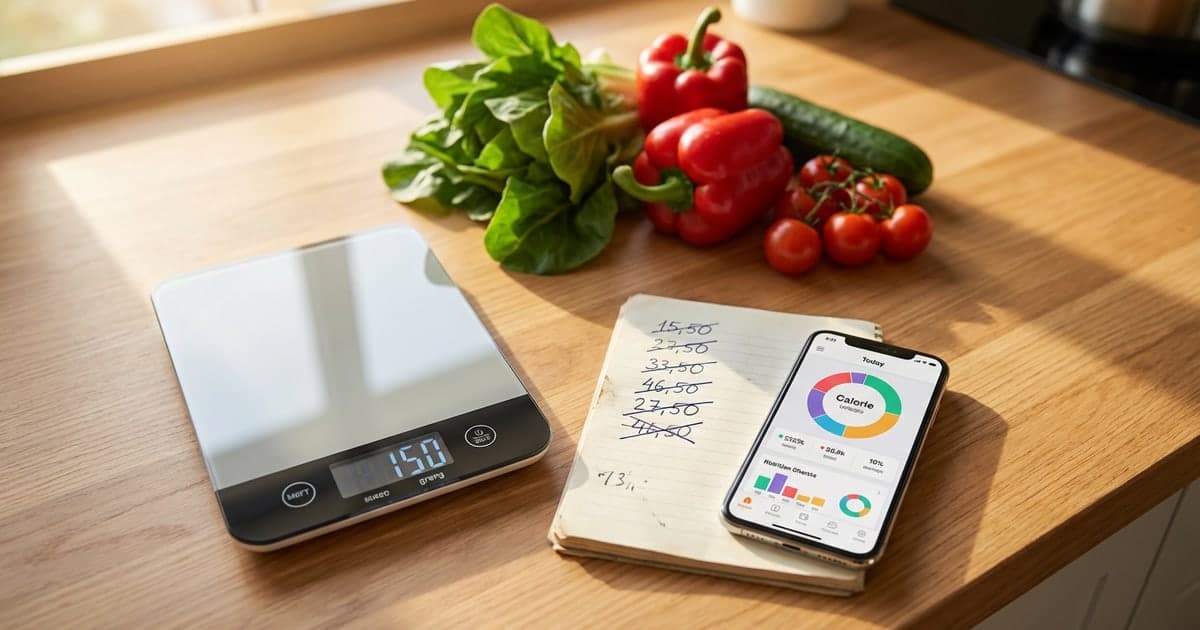
- Use a food scale for the first two weeks — not forever, just long enough to calibrate your eye
- Always log cooking fats — this is the single biggest source of hidden calories
- Round up slightly — psychological research shows we tend to underestimate, so a small buffer helps
- Trust the trend, not the day — weight fluctuates by 2-5 pounds daily from water alone
Reason 3: The All-or-Nothing Trap
You log perfectly for six days. On day seven you eat pizza at a party and have no idea how many calories were in it. Instead of estimating, you skip logging entirely. One skipped day turns into two, then a week, and suddenly you have "fallen off the wagon."
This all-or-nothing mentality kills more diets than any food ever could. People treat calorie counting as a pass/fail system. One bad day feels like a failure, and failure feels like a reason to quit.
The Fix: Adopt a Batting Average Mindset
Baseball players who get a hit 30% of the time are considered great. Apply the same logic to tracking. If you log 5 out of 7 days, that is a 71% success rate, and it is more than enough to see results.
On days you cannot track accurately:
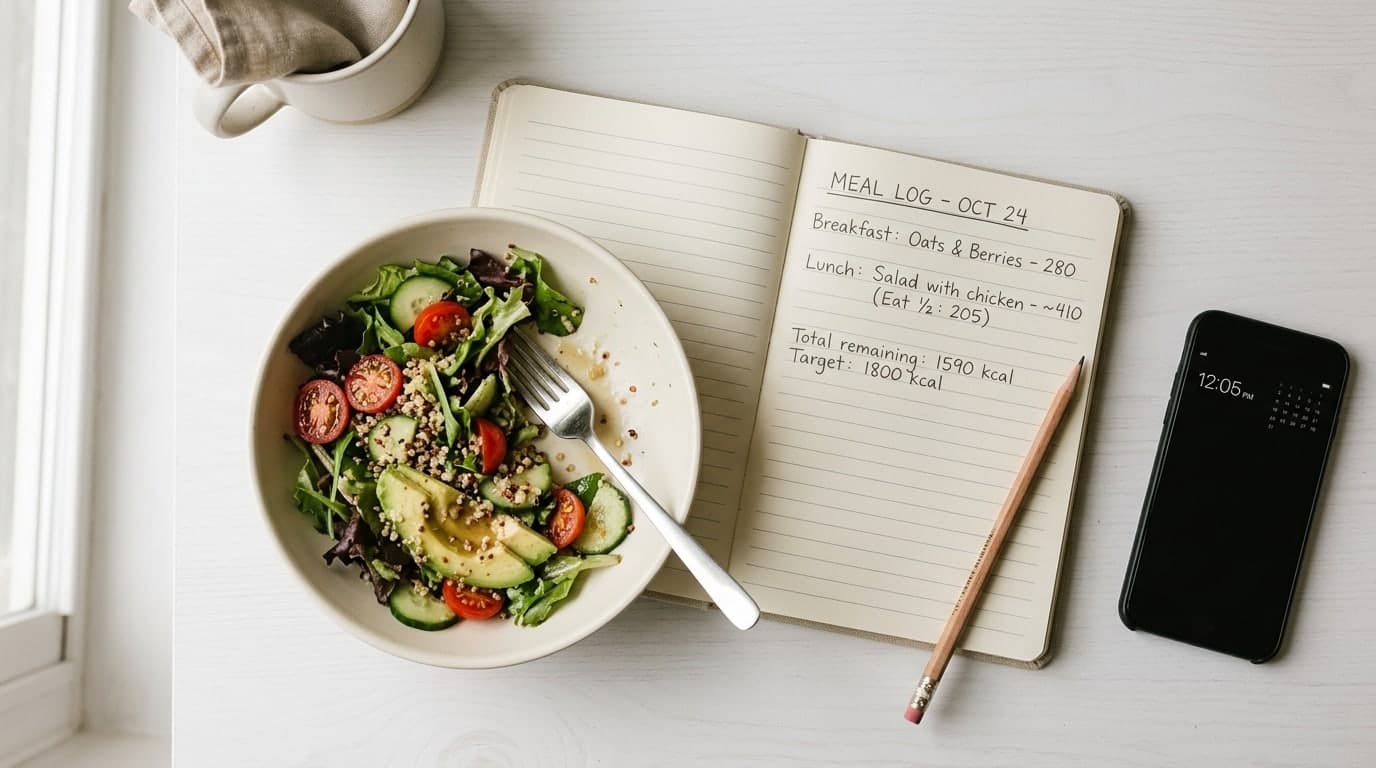
- Log a rough estimate rather than nothing — "restaurant pasta, approximately 800 calories" is infinitely better than a blank day
- Take a photo of your meal even if you do not log it immediately — you can come back to it later
- Do not compensate the next day — restricting after a high day starts a binge-restrict cycle
Reason 4: Counting Calories Without Context
A calorie number on its own does not tell you much. Hitting 1800 calories feels meaningless if you do not understand whether those calories are actually helping your body or working against it.
Many people track calories religiously but ignore what those calories are made of. They hit their number with a diet of protein bars, diet soda, and low-calorie frozen meals, then wonder why they feel terrible, lose muscle instead of fat, and eventually give up.
The Fix: Track Quality Alongside Quantity
The most successful long-term trackers pay attention to food quality, not just calorie counts. This means looking at:
- Protein intake — are you getting enough to preserve muscle mass?
- Fiber intake — are you eating enough whole foods to stay full?
- Micronutrient density — are your calories delivering vitamins and minerals?
- Processing level — how much of your diet is ultra-processed?
When you see your food through multiple lenses, the data becomes more meaningful and motivating. Calsy's Health Score grades every meal on an A-to-E scale that accounts for quality factors beyond just calories, which gives you a fuller picture of how well you are actually eating.
Reason 5: No Visible Results Fast Enough
People expect calorie counting to produce visible results within the first week. When the scale does not cooperate, they assume it is not working.
In reality, fat loss is slow and non-linear. You can lose fat while the scale stays flat or even goes up, thanks to water retention, hormonal fluctuations, and changes in muscle mass. This is especially true for women, whose weight can fluctuate 3-7 pounds across a menstrual cycle.
The Fix: Use Multiple Metrics
Do not rely on the scale alone:
- Take progress photos every 2-4 weeks — visual changes often appear before scale changes
- Track body measurements — waist, hips, and thigh circumference can show progress the scale misses
- Notice non-scale victories — better sleep, more energy, clothes fitting differently, improved digestion
- Track streaks and consistency — how many days in a row you have logged is itself a measure of progress
- Give it a true trial — commit to at least 30 days before evaluating results
The Sustainable Approach to Calorie Counting
The people who succeed at long-term tracking share a few common traits:
- They keep it simple. They do not weigh every gram or agonize over exact numbers. They aim for "close enough, consistently."
- They make it fast. They use tools that minimize effort, whether that is saved meals, barcode scanning, or photo-based AI tracking.
- They focus on learning. The goal is not to count calories forever. It is to build an intuitive understanding of what and how much you are eating.
- They track quality, not just quantity. They pay attention to how food makes them feel, not just the number it adds to their daily total.
- They forgive imperfect days. They log what they can and move on, knowing that consistency beats perfection every time.
Making the Habit Stick
If you have tried and failed at calorie counting before, the problem probably was not you. It was the method. Traditional manual tracking is tedious, error-prone, and ignores the qualitative side of nutrition.
The best approach is one you will actually maintain. That might mean tracking only protein and letting the rest fall into place. It might mean photographing every meal instead of typing it out. It might mean tracking five days a week and giving yourself weekends off.
Find the minimum effective dose of tracking that gives you the information you need, then protect that habit fiercely. Everything else is optional.
Ready to track smarter?
Snap a photo, get your calories, macros, and Health Score instantly. See what other trackers miss.
Download Calsy — It's Free