Hidden Calories in Everyday Foods (the Sneaky List)
Most people who plateau on a "calorie deficit" are not actually in one. They are eating 300–500 calories more than they think — almost always from a small set of foods that fly under the radar. Below is the list of usual suspects, in rough order of how often they sabotage tracking.
1. Olive oil and cooking fat — up to +400 kcal/day
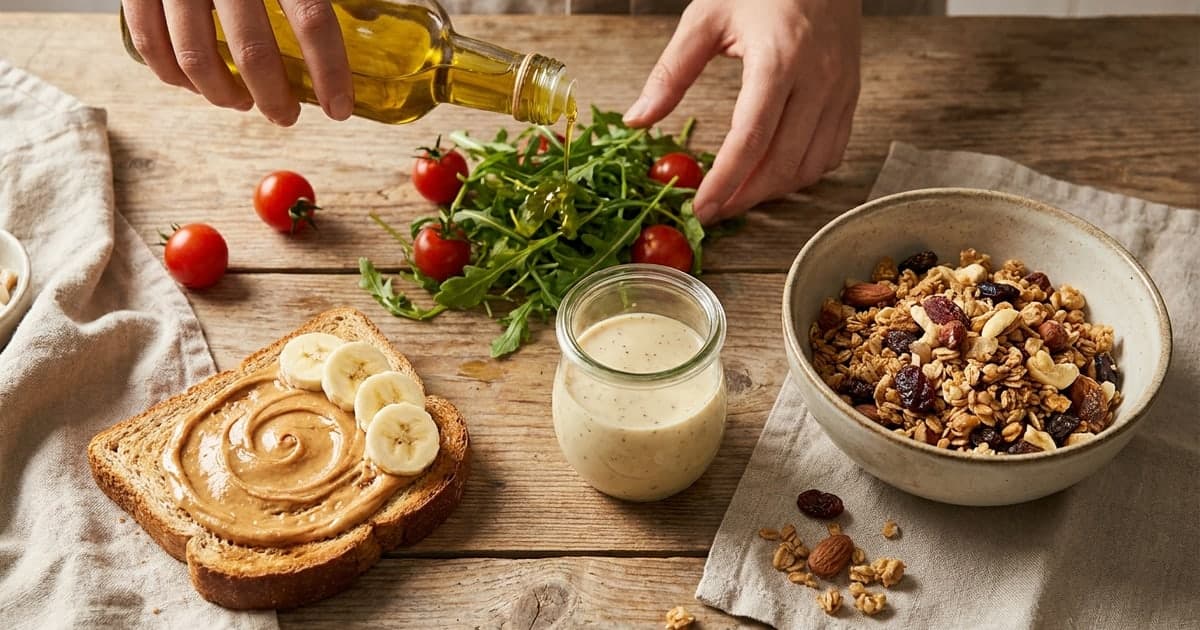
One tablespoon of olive oil = 120 calories. A "drizzle" on a salad is two tablespoons. A quick stir-fry uses two more. Roasting vegetables uses two more. That is 720 calories before you have even eaten any olive oil-the-food.
Spot it: if you cook at home and your weight is not moving, log oil first, before anything else. Use a teaspoon or, better, a spray.
2. Nut butters — +150–300 kcal in two tablespoons
Two tablespoons of peanut butter = 190 kcal. Three tablespoons (the realistic spoonful) = 285. Almond butter, cashew butter, tahini are similar.
Spot it: weigh nut butters with a scale, not a spoon. The difference between "I had a tablespoon" and "I had three" is the difference between hitting your target and missing by 200 calories.
3. Avocado — +400 kcal whole
A medium avocado = ~320 calories. A guacamole-sized portion = 400+. Avocado is healthy fat, but it is still fat — 9 calories per gram.
Spot it: quarter and half of an avocado are 80 and 160 kcal respectively. Use those as your portion units.
4. Granola — +250 kcal per "serving"
Most granolas are 480 calories per 100 g. A "serving" on the box is 30 g — about three tablespoons. The realistic bowl is 100–120 g. So a "yogurt with granola" is more like 600 kcal than 250.
Spot it: measure granola in tablespoons, not handfuls. Or switch to a lower-density topping (oats, hemp seeds, fresh berries).
5. Salad dressings — +200–400 kcal
Two tablespoons of caesar dressing: 160 kcal. Two of ranch: 140. Two of vinaigrette: 130. Restaurant salads often arrive with 4–6 tablespoons of dressing on the side.
Spot it: dress your own salad. Use vinegar + a teaspoon of olive oil. Or use yogurt-based dressings, which are typically half the calories of oil-based ones.
6. Coffee with milk and sugar — +150 kcal × 2/day
A latte with whole milk is 180 kcal. A "small" mocha is 250. Two of these per day adds up to a meal's worth of calories you almost certainly forgot to log.
Spot it: log every drink as you order it. Switch one of two daily lattes to black coffee or unsweetened cold brew.
7. Smoothies — +400–800 kcal in 16 oz
Smoothies have a halo. They are also calorie-dense. A typical "healthy" smoothie: 1 banana (105) + 1 cup berries (80) + 2 tbsp peanut butter (190) + 1 cup milk (150) + 1 tbsp honey (60) + protein powder (120) = 705 kcal in 16 oz.
Spot it: smoothies should fit your meal calorie target — they are a meal, not a snack. If you blend it, log it like a meal.
8. Liquid calories from juice and alcohol — +200–500 kcal
Orange juice = 110 kcal per cup. Apple juice = 115. A pint of beer = 200. A glass of wine = 125. Two beers and a glass of wine on a Friday is 525 calories you did not chew.
Spot it: liquid calories do not register as food. Log them at the moment you order. Switch one drink per day to water/sparkling water/black tea.
9. Restaurant pasta — 50–80 percent more than the home version
A home pasta plate with sauce: 500–600 kcal. The same pasta at a restaurant: 1,000–1,400 kcal. Why: more oil, butter, cream, cheese, and a 50 percent larger portion.
Spot it: assume restaurant dishes contain at least 1.5x the calories of the home version. For chains, look up the published nutrition data.
10. Trail mix and dried fruit — +500 kcal in a handful
A small handful of trail mix (50 g) = 250 kcal. The realistic "absent-mindedly while watching TV" portion = 100–150 g = 500–750 kcal. Dried fruit is about 4x more calorie-dense than fresh.
Spot it: pre-portion trail mix into 30 g bags. Buy whole nuts and fresh fruit instead.
11. "Low fat" and "fat free" packaged foods — +calories, less satiety
When fat is removed, sugar and starch are usually added to maintain texture and palatability. Result: same or higher calories, less satiating, more hunger 90 minutes later.
Spot it: ignore "low fat" claims. Compare calories per 100 g across the regular and reduced versions — they are often within 10 percent.
12. The "I just had a few bites" tax
Tasting while cooking, finishing your kid's plate, the bowl of olives at the start of a restaurant meal, the bread basket. Each individual instance is small (50–100 kcal) but daily totals run 200–400 kcal that never make it to your log.
Spot it: if it goes in your mouth, it goes in the log. Even a rough estimate is better than zero. A photo-AI tracker handles this well — point the camera at the plate before you eat anything else.
The pattern
Notice what most of these have in common:
- They are not "junk food." They are healthy or healthy-adjacent foods. The hidden-calorie problem is usually not chips and cookies — those people remember to log.
- They are calorie-dense and small in volume. A tablespoon of olive oil holds more calories than a cup of broccoli.
- They are easy to undercount because the eye does not match the gram.
How to fix it in one week
- Log all liquids first, the moment you start drinking them.
- Weigh oils, nut butters, and granola — the three biggest offenders.
- Photo-log every meal including the picks and tastes, not the planned dish.
- Restaurant meals: estimate +50 percent vs the home version, or use the published data when available.
Do this for two weeks and the "I'm in a deficit but not losing weight" phenomenon almost always disappears — because the deficit was actually a small surplus the entire time.
What this looks like with a photo tracker
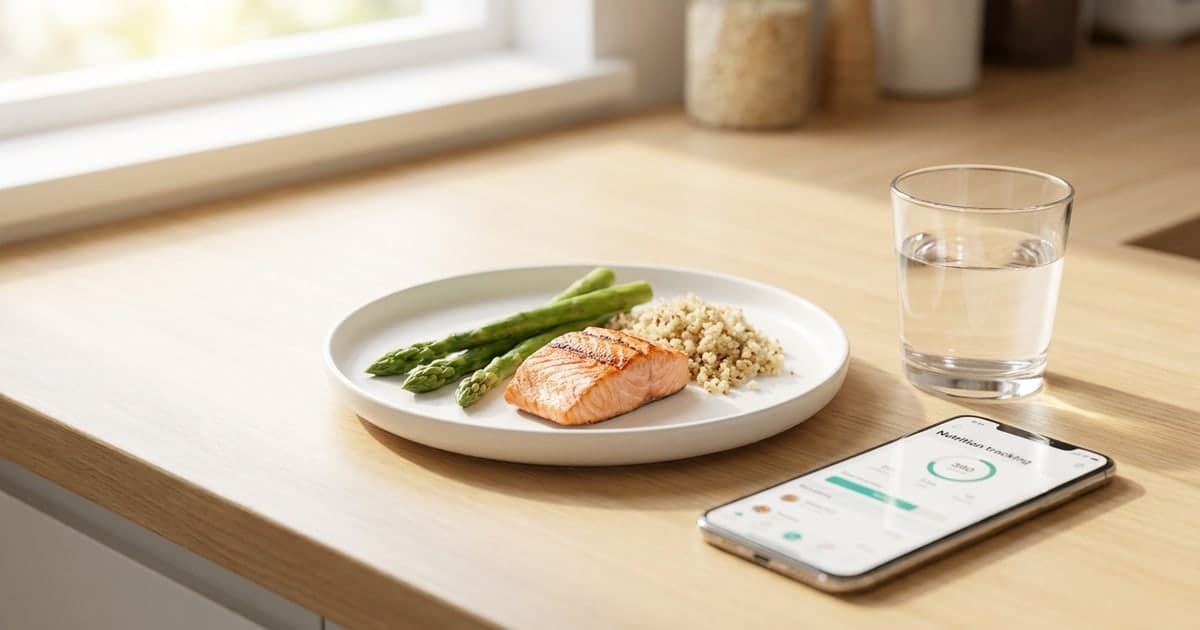
A photo-first calorie counter solves most of these problems by anchoring the log to the actual plate, not to a database entry or a portion guess. Calsy estimates oil and dressing volume from the photo, recognizes nut butter portions, and includes liquid calories as long as you point the camera at the glass before you drink. The hidden-calorie problem is largely a measurement problem — solve the measurement, and the diet works.
Ready to track smarter?
Snap a photo, get your calories, macros, and Health Score instantly. See what other trackers miss.
Download Calsy — It's Free