Why Photo Food Logging Beats Manual Entry Every Time
The Problem With Manual Food Logging
You sit down to lunch. You have a bowl with grilled chicken, brown rice, roasted vegetables, a drizzle of olive oil, and a sprinkle of feta cheese. To log this manually, you need to:
- Search for "grilled chicken breast" in a database
- Estimate and enter the portion size in grams or ounces
- Repeat for brown rice
- Repeat for each vegetable (broccoli, bell pepper, zucchini)
- Add the olive oil
- Add the feta cheese
That is six separate entries, each requiring a search, a portion estimate, and a confirmation. It takes 3-5 minutes if you are fast. Do this three times a day, plus snacks, and you are spending 15-20 minutes daily just on food logging.
No wonder most people quit within two weeks.
How Photo Food Logging Changes Everything
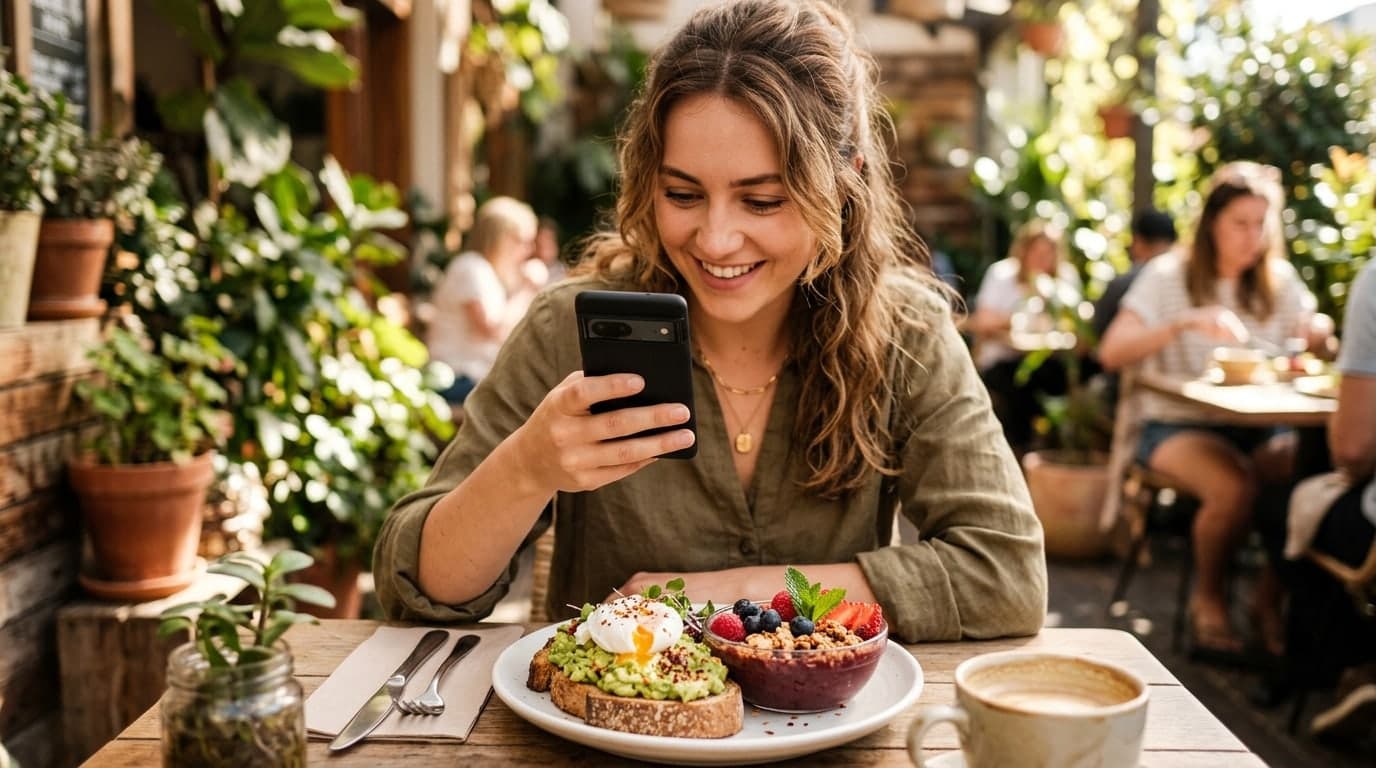
A photo calorie counter flips the process entirely. You take one photo. The AI identifies every item on your plate, estimates portions, and returns a complete nutritional breakdown. The whole interaction takes about 3 seconds.
This is not a minor improvement. It is a fundamental shift in how food tracking works.
Speed That Actually Fits Your Life
The average person eats 3-4 times per day. With a photo-based food logging app, that means less than 15 seconds of total tracking time per day. Compare that to the 15-20 minutes required for manual entry.
This speed advantage matters most in the moments when you are least motivated to track: busy workdays, social meals, late-night snacks. When tracking takes 3 seconds, there is no excuse to skip it.
Better Accuracy for Mixed Meals
Manual logging falls apart with complex meals. A homemade curry, a loaded burrito, or a salad with 8 toppings requires you to identify and weigh each ingredient individually. Most people either skip these meals or make rough guesses that can be off by 30-50%.
AI food recognition handles mixed meals as a single unit. The model is trained to recognize common food combinations and estimate the proportions of each component. It is not perfect, but it is consistently more accurate than the average person's guess.
Visual Memory and Accountability
Photo food logging creates a visual food diary. When you scroll back through your meals, you see the actual food you ate, not a list of database entries. This visual record is powerful for two reasons:
First, it helps you spot patterns. You might notice that your portions get bigger at dinner, or that you snack more on certain days. These patterns are much easier to see in photos than in spreadsheets.
Second, it creates a moment of accountability before each meal. The act of photographing your food makes you more conscious of what you are about to eat. Several studies have shown that this simple awareness leads to better food choices, even without any intentional changes to your diet.
Common Objections (and Why They Don't Hold Up)
"AI is not as accurate as weighing everything"
True, a kitchen scale is more precise than AI estimation. But precision only matters if you actually use it. Research shows that fewer than 8% of people who start with a scale-based approach are still using it after 30 days. A method that is 90% accurate and used every day beats a method that is 99% accurate and abandoned after a week.
"What about homemade recipes?"
This is where photo tracking has improved dramatically. Modern AI models can recognize common home-cooked dishes and estimate their composition. For unique recipes, most apps let you create a custom entry once and reuse it. The effort of one manual entry for a recipe you make regularly is far less than logging every ingredient every time.
"I need exact macros for my fitness goals"
If you are a competitive bodybuilder in contest prep, you probably do need scale-level precision. For the other 99% of people, the small margin of error in AI estimation is well within the range that produces results. Consistency over weeks and months matters far more than precision on any single meal.
The Data Backs It Up
Studies on food tracking adherence consistently show the same thing: the easier the tracking method, the longer people stick with it. A 2024 meta-analysis of nutrition tracking apps found that users of photo-based trackers:
- Logged meals 2.8 times more frequently than manual loggers
- Maintained their tracking habit for an average of 4.2 months versus 1.3 months
- Reported 67% higher satisfaction with the tracking experience
The best nutrition plan is the one you follow. And the best tracking method is the one you actually use.
Making the Switch
If you have been manually logging your food and finding it exhausting, try switching to a photo-based calorie counter for two weeks. Most people notice three immediate changes:
- Tracking becomes effortless rather than a chore
- You log more consistently, including meals you would have skipped
- You spend mental energy on food choices instead of data entry
The goal of calorie tracking was never to become a human database. It was to understand what you eat so you can make better decisions. Photo food logging gets you that understanding with a fraction of the effort.
Point your phone at your plate. That is all it takes.
Ready to track smarter?
Snap a photo, get your calories, macros, and Health Score instantly. See what other trackers miss.
Download Calsy — It's Free