9 Calorie Counting Mistakes Beginners Make (and How to Fix Them)
Calorie counting works. It is one of the most reliably evidence-backed strategies for weight loss and body composition change. The problem is not the method — the problem is the way most beginners try to execute it. Below are the nine mistakes that knock people out within the first two weeks, and the quick fix for each one.
1. Trying to weigh every ingredient
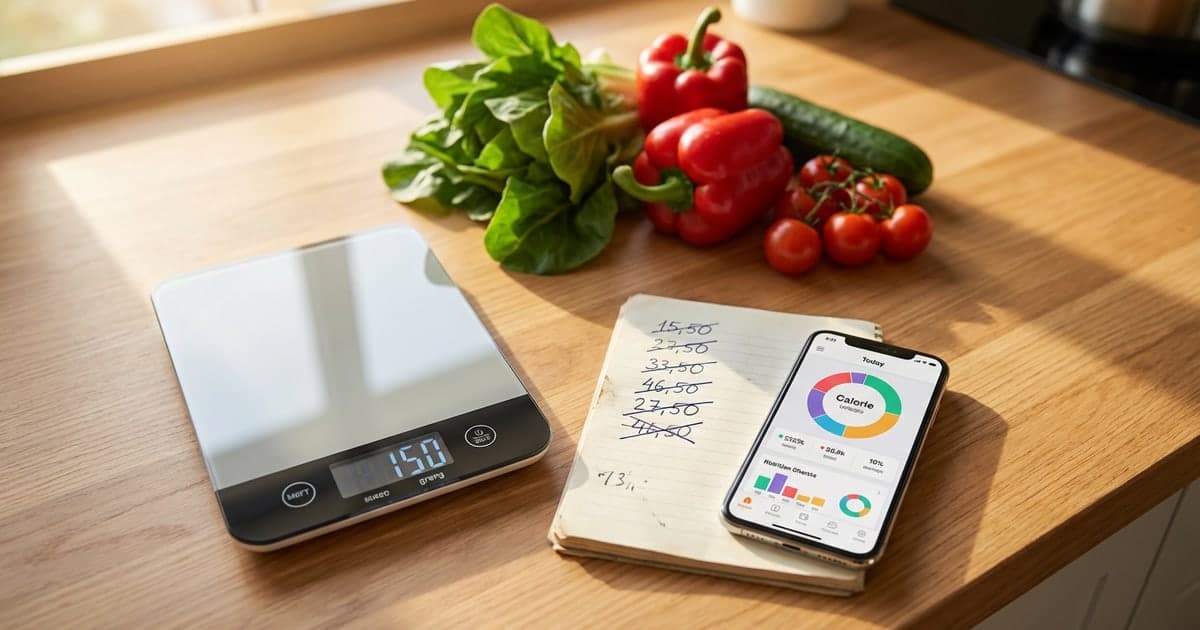
The biggest reason people quit is the kitchen scale. Weighing rice, then weighing the broth, then weighing the chicken, then weighing the spinach, then logging it as four separate entries is unsustainable. After three days the average tracker has stopped weighing accurately and is just guessing — which means the precision was a fiction anyway.
Fix: trust your eyes for everything except packaged products. A photo-first calorie counter like Calsy estimates portion sizes from the image, with accuracy comparable to or better than untrained portion-guessing. Use the kitchen scale only for the foods that genuinely move the needle (peanut butter, oil, granola — calorie-dense small portions).
2. Logging in detail today, not at all tomorrow
Perfect logs followed by zero logs is worse than rough logs every day. Habit research consistently shows that consistency beats accuracy in behavior change. A two-week stretch of "B+" logs is more useful than four "A+" days followed by silence.
Fix: lower the bar. Aim for 80 percent compliance, not 100 percent. If you genuinely cannot log a meal, take a photo and let the app estimate later — even an approximate entry keeps the streak alive.
3. Underestimating cooking oil and sauces
Two tablespoons of olive oil are 240 calories. A drizzle on a salad and a pan-fry of vegetables can easily add 400 calories that your eye does not register. Beginners almost universally underestimate fats by 30–50 percent.
Fix: when you cook, log the oil first, before you forget it is even there. If you eat out, assume restaurant dishes contain more fat than a home version of the same dish, not less.
4. Treating the database entry as truth
Generic database entries are an average. "Pizza, slice" might be 200 kcal in one entry and 350 kcal in another. If you pick the lowest entry every time, your daily total is fictional.
Fix: use packaged-food barcodes whenever possible (these are exact). For prepared and home-cooked food, prefer photo-AI estimation over pulling from a database — the photo is anchored to your actual meal, not an average.
5. Eating "normally" before tracking, then tracking the cutback
A common pattern: eat at 2,500 kcal/day uncounted for a year, decide to lose weight, drop to 1,400 kcal, white-knuckle it for ten days, then binge. The deficit was too aggressive because the baseline was never measured.
Fix: measure your baseline first. Track everything you eat normally for 7–10 days without changing the food. Then drop 300–500 calories from that number — not from a generic calculator estimate.
6. Ignoring liquid calories
Coffee with milk and sugar twice a day is 180 kcal. A glass of orange juice is 110 kcal. Two beers are 300 kcal. None of these feel like food, so beginners forget to log them — and then wonder why the numbers do not add up.
Fix: log liquids first thing when you order them. If your tracker has a "favorites" feature, store your standard coffee/tea/drinks once and re-log with one tap.
7. Optimizing the wrong macro
Beginners often obsess about carbs and ignore protein. The research is clear: at any given calorie target, higher-protein diets preserve more muscle, increase satiety, and produce better long-term results. Cutting calories without enough protein makes you lose lean tissue along with fat — and feel hungrier doing it.
Fix: target 1.6–2.2 grams of protein per kilogram of body weight per day. Set this as a non-negotiable; let carbs and fat fill the rest of your calorie budget.
8. Confusing "low calorie" with "high quality"
A diet soda is zero calories. A bag of fat-free chips is 100 calories. Both can fit your daily total and still leave you nutritionally bankrupt — fiber-low, micronutrient-poor, additive-loaded.
Fix: look at food quality, not just the number. A meal scored A through E for nutritional quality (protein source, fiber, sugar, additives, processing level) tells you something the calorie number alone cannot. Calsy's Health Score does this automatically; if you use a different tracker, manually scan the ingredient list and prefer foods with five or fewer recognizable items.
9. Quitting on the first plateau
Weight loss is not linear. Two pounds the first week, half a pound the second, zero the third, then a kilogram in the fourth. Most beginners interpret a flat week as "this isn't working" and quit at exactly the moment the data starts to mean something.
Fix: judge progress on a four-week rolling average, not a single weigh-in. Weigh yourself daily and look at the trend line, not the daily noise. Plateaus are almost always a measurement issue (water retention, lifecycle changes, an unusually salty meal), not a calorie issue.
Putting it together
If you are starting this week, do exactly three things:
- Pick a tracker that does not require typing — manual database entry is the single biggest reason beginners quit. Photo-AI cuts the friction by an order of magnitude.
- Hit a daily protein target. Everything else is secondary.
- Judge yourself on weekly averages, not daily numbers.
Track for thirty days at 80 percent compliance. By the end of the month you will have replaced "calorie counting" with a habit you barely think about — which is the only version that lasts.
Ready to track smarter?
Snap a photo, get your calories, macros, and Health Score instantly. See what other trackers miss.
Download Calsy — It's Free