How to Track Calories at Restaurants (Without Going Crazy)
The single biggest reason calorie tracking falls apart is "I went out for dinner." Either people skip the log entirely, or they spend twenty minutes interrogating the waiter about cooking oil. Neither sustainable. Below is the realistic system.
The default rule: assume +50 percent vs the home version
Restaurant kitchens cook with significantly more oil, butter, cream, salt, and sugar than you would at home. They also serve larger portions. A reasonable default for unspecified restaurant meals:
- A pasta dish you'd cook at 500 kcal at home → assume 750–900 kcal at a restaurant.
- A burger that would be 600 kcal at home → assume 900–1,200 kcal at a restaurant.
- Salad with chicken and dressing → assume 600–800 kcal, not the 350 you'd guess.
This rule is intentionally conservative. It biases you toward slight over-counting, which is the safer side of the error.
The order strategy that does most of the work
Before you read the menu, decide what shape your order will take. The order itself controls 80 percent of the calorie impact.
Default order template (most cuisines):
- One protein-forward main — grilled fish, chicken, lean meat. Avoid breaded/fried.
- One vegetable side or salad — dressing on the side.
- Optionally: bread or rice as a small side, not as the meal.
- Water with the meal, alcohol counted in the budget.
This template puts you at 600–900 kcal for most cuisines without any further effort. Variants:
- Italian: prefer tomato-based pasta over cream/butter sauces. Order half-portions when the menu offers them.
- Asian: stir-fries are oil-heavy; steamed dishes are the cleaner option. Sushi is a calorie win (rice + lean fish + minimal added fat).
- Mexican: ditch the chip basket (700 kcal before you order). Choose grilled fillings over fried; soft tortillas over crispy. Burrito bowls > burritos.
- Indian: tandoori dishes are protein-forward and lower in fat. Cream-based curries (butter chicken, tikka masala) are calorie-dense; share or split.
- Burgers/diners: lean burger + side salad + no fries beats a "healthy" salad swimming in dressing and breaded chicken.
How to estimate the meal in under 30 seconds
You do not need to know exact calories. You need to know which bucket you are in: 600, 900, or 1,200+.
A 30-second mental checklist before the food arrives:
- Cooking method? Grilled/steamed/baked = baseline. Pan-fried with oil = +200. Deep-fried = +400. Cream sauce = +250. Cheese-baked = +300.
- Portion size relative to home? Same = baseline. Bigger plate = +30 percent. American chain portion = +50–80 percent.
- Hidden fats? Butter glaze on meat (+100), oil on pasta (+150), cheese topping (+150).
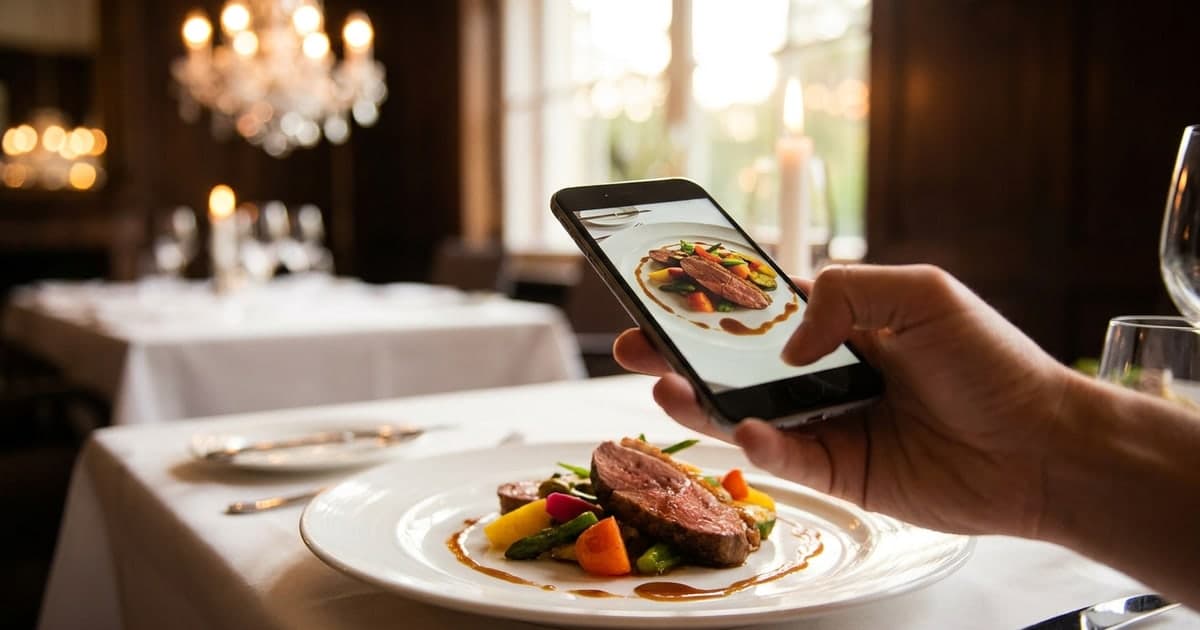
That gives you a fast, defensible estimate. With a photo-AI tracker you can also just take a picture when the food arrives and let the AI estimate — it tends to be more accurate than mental math for unfamiliar dishes.
Chain restaurants: use the published data
US, UK, and EU chain restaurants publish nutrition data online. This is the easy mode of restaurant tracking.
- Search "[restaurant name] nutrition" before you go.
- Pre-pick your order based on the published numbers.
- Log the exact entry from the chain in your tracker.
Many trackers (including Calsy) include chain-restaurant menus in their database — log by selecting the dish, no estimation needed.
Independent restaurants: photo-log + estimate
For non-chain restaurants, take a top-down photo of the plate and log it through a photo-AI tracker. The AI handles three things mental math doesn't:
- Portion size — restaurant portions vary wildly; the photo anchors to the actual plate.
- Multi-component dishes — segments rice + protein + vegetables + sauce separately.
- Sauces and oils — visible glaze and dressing get included; you don't have to remember to add them.
If you don't have a photo-AI tracker, the next best option: log the most similar entry from the database, then add +30 percent for restaurant overhead.
The social side most articles ignore
Here is what nobody tells you: tracking at the table is a social signal. Pulling out the calorie app every time the food arrives, asking the waiter what oil they used, weighing the bread roll on a pocket scale — these things are real and they create friction in your relationships.
Sustainable tracking respects the social context. Practical adjustments:
- Photo-log instead of typing. A photo of the plate takes one second and is socially indistinguishable from "nice plating, let me snap it." Database searching at the table is not.
- Log when the food arrives, not when you order. Looking at the menu while typing dish names looks fine; looking at the plate while typing looks compulsive.
- Catch up at the end of the meal if needed. Even logging 10 minutes after the meal is fine; the data is still in your visual memory.
- Skip a meal occasionally. Two restaurant meals per week with rough estimates is sustainable. Five per week with photographic precision is not.
The "treat meal" budget approach
If you go out 1–2 times per week, build it into your weekly calorie budget instead of trying to undo it after the fact.
Weekly TDEE for a 70 kg moderately-active person: 2,300 × 7 = 16,100 calories. Weekly weight-loss target at 500 deficit/day: 12,600 calories.
A two-meal-out budget might look like:
- Five "normal" days at 1,600 kcal = 8,000
- Two "out" days at 2,300 kcal (one big restaurant meal + lighter rest of day) = 4,600
- Total: 12,600. Target hit.
This requires you to pre-bank calories on restaurant days by eating lighter at breakfast and lunch. A reasonable lighter day:
- Breakfast: Greek yogurt + berries + coffee (250)
- Lunch: large salad + lean protein (400)
- Snack: piece of fruit (80)
- Restaurant dinner: 1,500 kcal target → fits
That structure works long-term. The "I'll just be careful" plan does not.
What to do this week
- Pick one restaurant meal in the next seven days.
- Pre-bank calories by eating 200–300 lighter at breakfast and lunch.
- Photo-log the meal when it arrives.
- Use the +50 percent rule if estimating manually.
- Skip the bread/chip basket as the default.
Tracking restaurants is not about being perfect. It is about not letting one or two meals turn a 4,500-calorie weekly deficit into a 1,500-calorie weekly deficit. The math wants you to count restaurants approximately. It does not need them counted exactly.
Ready to track smarter?
Snap a photo, get your calories, macros, and Health Score instantly. See what other trackers miss.
Download Calsy — It's Free