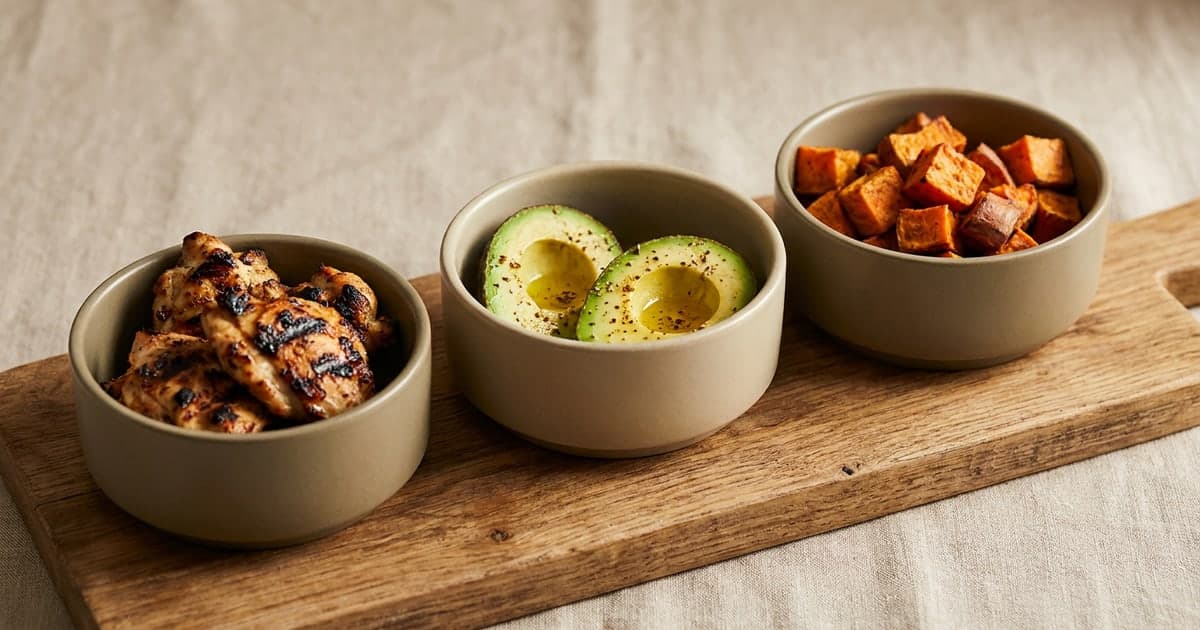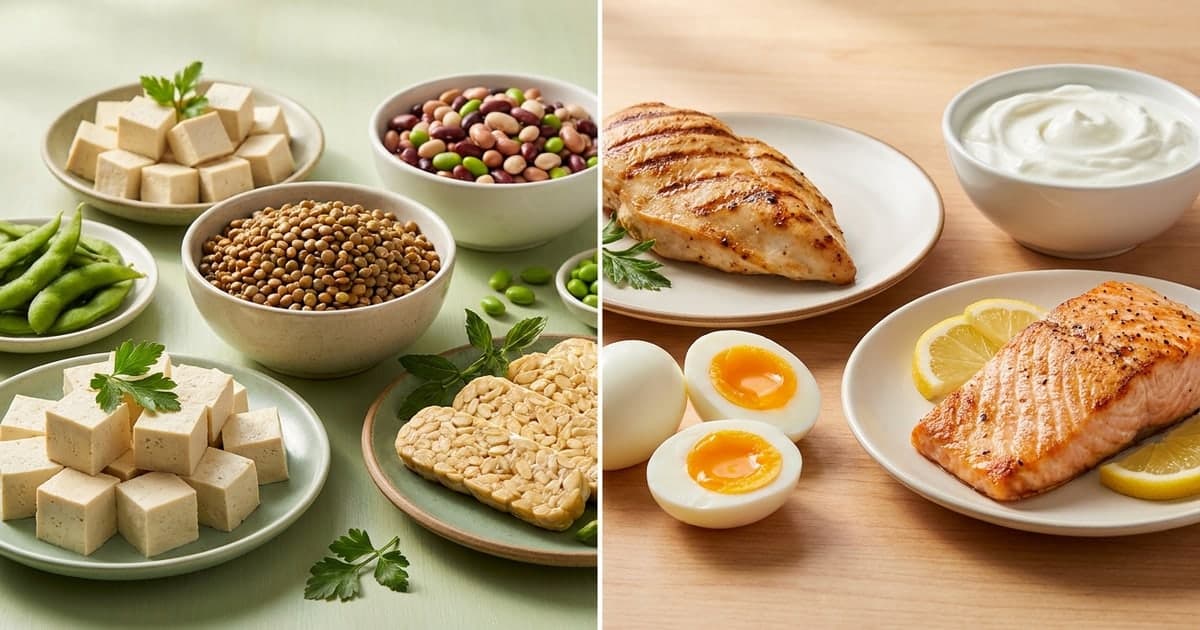
Plant Protein vs Animal Protein: The Honest Comparison
The plant-vs-animal-protein argument is usually answered with ideology, not data. The honest version: both work, but they're not equivalent — and the real-world implications affect your daily diet planning more than the headlines suggest.
What's actually different
1. Amino acid completeness
Animal proteins are essentially always complete — they contain all nine essential amino acids in roughly the proportions humans need.
Most plant proteins are incomplete in at least one essential amino acid:
- Grains (wheat, rice, oats) → low in lysine.
- Legumes (beans, lentils, chickpeas) → low in methionine.
- Nuts and seeds → variable, often low in lysine.
- Soy and quinoa are exceptions — both are complete plant proteins.
The classic workaround: combine grains and legumes (rice + beans, hummus + pita, lentils + bread). The combination is functionally complete. This doesn't have to happen in the same meal — your liver pools amino acids across the day — but daily diversity matters more on a plant-based diet.
2. Digestibility (DIAAS)
The body absorbs animal protein more efficiently than plant protein, with some exceptions.
| Source | DIAAS | What it means |
|---|---|---|
| Whey isolate | 1.10 | 110% of reference; ideal |
| Whole eggs | 1.13 | Excellent |
| Beef | 1.10 | Excellent |
| Chicken | 1.08 | Excellent |
| Fish | 1.00 | Reference standard |
| Soy protein isolate | 0.91 | Best plant protein isolate |
| Pea protein isolate | 0.93 | Close to soy |
| Whole soy / tofu | 0.84 | Strong whole-food plant protein |
| Beans (cooked) | 0.59 | Limited — combine with grains |
| Wheat (gluten) | 0.54 | Limited in lysine |
The implication: when calculating "useful protein," plant-based eaters need to multiply intake by ~0.85 vs animal-based intake by ~1.0. To get the same effective protein dose, plant-based eaters need ~15–20 percent more total grams.
3. Leucine content
Leucine is the amino acid that triggers muscle protein synthesis. The threshold is roughly 2.5–3 g of leucine per meal to maximize the response.
- 30 g whey isolate: ~3 g leucine ✓
- 150 g chicken: ~3 g leucine ✓
- 30 g pea protein: ~2.4 g leucine ⚠️ (borderline)
- 250 g cooked lentils: ~1.4 g leucine ✗
- 150 g tofu: ~2.3 g leucine ⚠️
For muscle building, plant-based eaters need to be more deliberate about leucine — concentrate plant protein in fewer meals, use isolates, or add specific leucine-rich foods (soy, peas, hemp).
4. Iron, B12, zinc, omega-3
Animal protein sources come with bioavailable micronutrients that are harder to get from plants:
- Heme iron (red meat, fish): absorbed at 15–35 percent efficiency. Plant iron (non-heme): 2–20 percent, lower with phytate-rich foods.
- Vitamin B12: only present in meaningful amounts in animal foods. Plant-based eaters require supplementation or fortified foods. Period.
- Zinc: lower bioavailability in plants due to phytates.
- Omega-3 EPA/DHA: only in fatty fish. Plant ALA (flax, chia) converts to EPA/DHA at 5–10 percent efficiency.
- Creatine: only in animal foods. Plant-based athletes benefit measurably from creatine supplementation.
Plant-based diets are nutritionally complete with planning. Without planning, deficiency is real.
5. Saturated fat content
Animal proteins vary widely in saturated fat:
- Lean cuts (chicken breast, white fish, lean beef, egg whites): negligible.
- Fatty cuts (ribeye, fatty pork, regular ground beef): substantial.
- Whole eggs: moderate (mostly in the yolk).
- Whole milk dairy: moderate.
Plant proteins are essentially always low in saturated fat.
The implication: lean animal proteins are similar to plant proteins on this metric. Choosing chicken breast or white fish neutralizes the saturated-fat argument. Choosing fatty processed meats does not.
6. Calorie density
Animal proteins are more protein-dense per calorie:
- 100 g chicken breast → 31 g protein in 165 kcal (19 g protein per 100 kcal)
- 100 g lentils (cooked) → 9 g protein in 115 kcal (8 g protein per 100 kcal)
- 100 g tofu (firm) → 8 g protein in 75 kcal (11 g protein per 100 kcal)
For a calorie-deficit diet, animal proteins make hitting protein targets easier without going over calories. Plant-based dieters need to lean on isolates and the most protein-dense whole foods (tofu, tempeh, edamame) to compensate.
7. Long-term health outcomes
This is where the data gets nuanced.
- Processed red meat (sausages, hot dogs, bacon): consistently associated with increased mortality and disease risk in epidemiological studies. WHO classifies as Group 1 carcinogen for colorectal cancer.
- Unprocessed red meat: smaller, less consistent associations with disease. Moderate intake (1–2 servings/week) appears benign.
- Poultry, fish: neutral-to-positive associations with longevity.
- Plant proteins: associated with reduced cardiovascular risk and longer lifespan in cohort studies.
The honest take: the strongest health signal is processed-meat avoidance, not "don't eat animals." Lean animal protein eaten as part of a high-quality diet has a benign profile. Heavy processed meat consumption is the consistent risk factor.
The practical framework
For most goals, here's what the evidence supports:
If you're omnivorous
- Anchor most meals with lean animal protein: chicken breast, white fish, lean beef, eggs, dairy.
- Add legumes (lentils, chickpeas, beans) several times per week for fiber and variety.
- Limit processed meats to occasional use.
- This combination gives you the highest protein density per calorie + complete amino acid profile + bioavailable micronutrients.
If you're plant-based
- Aim for 1.8–2.0 g of protein per kg of body weight (vs 1.6 for omnivores).
- Use soy products and pea protein as your primary high-quality sources.
- Concentrate protein in fewer, larger meals to hit the leucine threshold per meal.
- Supplement B12 non-negotiably; consider creatine and algae-based EPA/DHA.
- Include legumes + grains daily for amino acid coverage.
If you're flexitarian (most people)
- Default to plant-forward meals; add animal protein where it makes hitting goals easier.
- Eggs are an excellent middle-ground option.
- Aim for 70–80 percent of protein from any source you want, with deliberate quality picks.
The argument that's overrated
"Plant protein causes cancer" or "animal protein causes cancer" are both overclaims. The relevant question is specific food, in specific amounts. Heavy daily processed meat consumption is associated with increased risk. Eating chicken three times a week and fish twice a week is not. Eating beans every day is fine and probably good.
What to do this week
- Decide your default — omnivore, plant-based, or flexitarian.
- Hit the right protein target for your category (1.6 g/kg or 1.8 g/kg).
- Anchor each meal with a high-DIAAS protein source.
- Track protein per meal — most people undercount.
- Reduce processed meat to occasional use, regardless of approach.
Both diets work for body composition. Both can be optimized for health. The choice is preference, not biology — but the implementation details differ. Get the details right and the protein source becomes secondary.
Ready to track smarter?
Snap a photo, get your calories, macros, and Health Score instantly. See what other trackers miss.
Download Calsy — It's Free