How Accurate Are Calorie Counter Apps, Really?
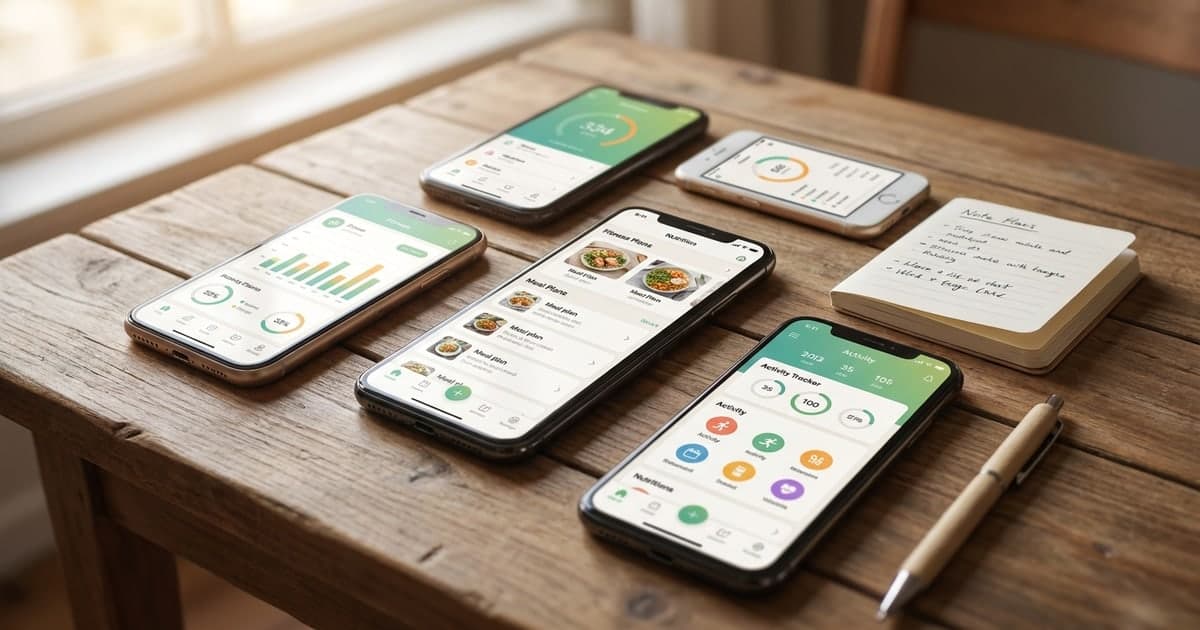
Ask ten people who have used a calorie counter for more than a month, and most will tell you the same thing: the number at the bottom of the screen feels like a fact, but they know, somewhere in the back of their mind, that it isn't quite. The honest answer to "how accurate are calorie counter apps" is it depends almost entirely on how you use them. A careful user with a kitchen scale can stay within 5% of reality. A casual user picking the first crowd-sourced match can drift 25–40% off without noticing.
This is a piece about where the errors come from, which methods are tightest, and a protocol to close the gap.
The four sources of error (most people only know two)
Every calorie estimate flows through four lossy stages. The error compounds.
- Database accuracy. What does the app think a food contains per 100g?
- Portion estimation. How much of that food did you actually eat?
- Food label tolerance. What did the manufacturer round to?
- Cooking transformations. Did the food gain or lose mass between raw and plate?
The first two get talked about constantly. The last two are where silent error accumulates.
1. Database accuracy: crowd-sourced vs curated
MyFitnessPal famously holds 14M+ entries, but a large share are user-submitted and unverified. Independent audits over the past several years have repeatedly found that crowd-sourced entries on long-tail foods (regional dishes, restaurant items, homemade recipes) are off by 30–50% in either direction. The first search result is rarely the most accurate one — it's usually the most logged.
Curated databases (Nutritionix, USDA-derived sources, Open Food Facts with verification) are tighter — typically within 5–10% of lab values — but smaller. They cover packaged staples and standardized restaurant items well, and global home cooking poorly.
The practical implication: selecting the right database entry can produce more error than weighing the food wrong.
2. Portion estimation: the biggest leak
Cornell-style research on plate-portion estimation has run for years now, and the result keeps replicating: when people eyeball home-cooked plates, they underestimate by 20–40% on average, with calorie-dense foods (oils, nuts, cheese, sauces) underestimated the most. A tablespoon of olive oil is 120 kcal, and "a drizzle" is almost always two or three.
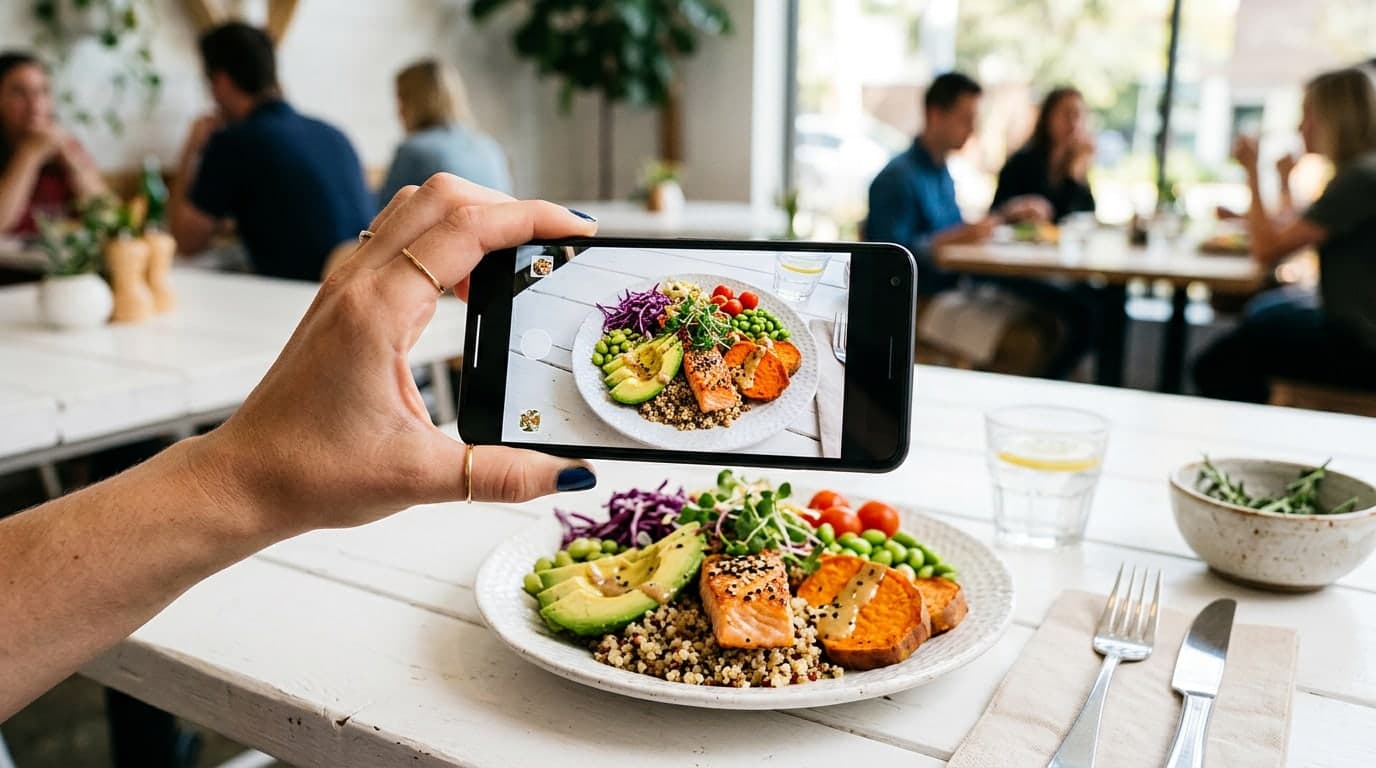
This is also why photo AI — even modern photo AI — is bottlenecked on portion, not on identification. Recognizing pasta is easy. Knowing whether the bowl holds 90g or 180g of cooked pasta from a flat 2D image is genuinely hard.
3. Food label tolerance
The FDA permits packaged-food calorie labels to be off by ±20% as long as they don't under-declare nutrients of concern. Surveys of packaged snacks repeatedly find that real calorie content lands near the upper end of that tolerance — manufacturers don't get penalized for over-delivering. If your 200 kcal bar is actually 230, that's 30 extra kcal per bar, every time, forever.
This is invisible to every app on the market, because every app trusts the label.
4. Cooking transformations: the silent one
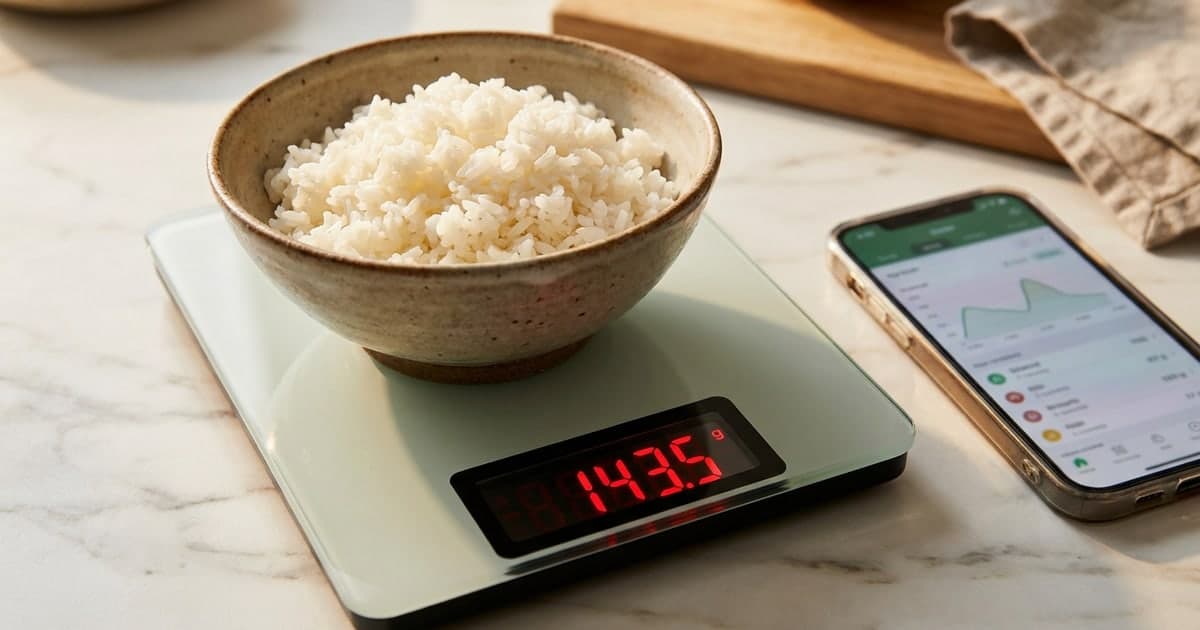
Pasta is the canonical example. 100g of dry spaghetti is ~370 kcal. After cooking, that same pasta weighs ~220–240g and still contains 370 kcal — because the calories are in the carbs, not the water. If you log "100g cooked pasta" from a database that's actually keyed to dry, you've tripled the entry. If you log "100g dry pasta" but weigh it cooked, you've cut it by more than half.
Rice, beans, oats, and lentils have the same trap. The reverse trap: oil. You pour 15g of olive oil into a pan, sauté vegetables, and the oil visually disappears. It didn't. It absorbed into the food. 130 kcal that the photo can't see and that most people forget to log.
Method-by-method accuracy
A balanced look at how tight each tracking method actually is under realistic conditions:
| Method | Main source of error | Typical accuracy | Best for |
|---|---|---|---|
| Manual search + log (crowd-sourced) | Wrong database entry | ±25–40% | Common packaged foods you can verify |
| Barcode scan (curated DB) | Label tolerance | ±10–15% | Packaged foods, snacks, drinks |
| Photo AI (older, 2018–2022) | Identification + portion | ±30–45% | Common Western single-item plates |
| Photo AI (modern multimodal, 2024–2026) | Portion estimation | ±15–25% | Restaurant plates, mixed dishes, global cuisine |
| Kitchen scale + curated DB | User compliance | ±5–10% | Home-cooked ingredients you weigh raw |
| Stacked (scale + barcode + photo AI) | Practical compliance | ±5–8% | Real-world daily tracking |
Older photo AI — Lose It!'s original Snap It! generation, for example — was trained on narrow datasets and frequently misidentified anything outside common Western meals. The 2024–2026 multimodal generation is a different category: typical reported identification accuracy is 80–90% on real-world plates, including multi-item segmentation. Modern photo recognition has gotten dramatically better, but portion estimation from a 2D image is still the floor on accuracy — you simply cannot see depth, density, or what's hidden under the top layer.
Why ±10% is actually fine for weight loss
Here's something most apps don't tell you: perfection is not required. If your target is 1800 kcal and your tracking is ±10% accurate, your "perfect" day is somewhere between 1620 and 1980. That sounds like a lot of slop, but:
- The trend matters, not the daily number.
- Weekly rolling averages cancel most of the noise.
- TDEE itself fluctuates ±5–10% day to day from NEAT alone.
- The scale validates the tracking — if you're losing weight at the expected rate, your tracking is accurate enough by definition.
Where ±10% starts to matter is physique fine-tuning: a lean bodybuilder cutting from 12% to 8% body fat needs tighter tracking because the deficit margin is smaller. For the 95% of users who want to lose 10–30 lbs and keep it off, "accurate enough to see the trend" is the entire game. People who stall on a calorie deficit usually aren't off because of database error — they're off because of unweighed fats, missed snacks, and weekend drift.
Track the trend, not the day
Daily calorie logs are noisy in both directions: bigger meal at lunch, smaller dinner, sodium-driven scale fluctuation the next morning. A 7-day rolling average is the signal under that noise. If your daily logs read 1820, 2100, 1650, 1900, 1750, 2300, 1700, your weekly average is ~1890 kcal — and that number, repeated over four weeks, is what predicts your weight change.
This is also why I'd argue consistency of method matters more than absolute accuracy. If you log the same way every day with the same systematic error, the trend is still clean. Switching between methods (manual on Monday, photo AI on Tuesday, eyeballed on Wednesday) introduces variable error, which is much harder to read.
A 4-step protocol to bring tracking within 5%
The stack approach: use the right tool for each food category. No single method wins everywhere.
Step 1: Weigh fats and oils on a kitchen scale. This is the single highest-leverage habit in calorie tracking. Oils, butter, nut butters, cheese, mayonnaise, and dressings are calorie-dense and chronically under-portioned. A $15 scale and 10 seconds per use closes 80% of the gap for most people. Weigh before cooking — the oil that goes in the pan is what you ate.
Step 2: Barcode-scan packaged foods. Use an app with a curated barcode database (not pure crowd-sourced), and accept that you're inheriting ±10–15% from label tolerance. There's nothing you can do about that, and obsessing over it is a waste of energy.
Step 3: Photo-AI your restaurant and unstructured plates. This is where modern photo AI earns its keep. Restaurant meals are nearly impossible to log manually — you don't know the chef's oil, the sauce composition, or the exact portion. Modern multimodal photo recognition gives you a credible estimate in seconds. Restaurant tracking has always been the weakest link in manual logging; photo AI moves it from "guess" to "structured guess," which is a real upgrade. Calsy and a couple of competitors are in this generation; older photo features built on 2018–2022 models are not.
Step 4: Validate weekly with the scale. If you average 500 kcal under your TDEE and you're losing ~1 lb/week, your tracking is calibrated. If you're losing less, your real intake is higher than logged — usually from unweighed fats, missed snacks, or cooking-transformation errors. Adjust until the math matches the body.
On Calsy and where AI tracking sits in this stack
I'd be dishonest if I said photo AI replaces the kitchen scale. It doesn't — not in 2026, and probably not soon. For raw ingredients you cook yourself, scale + curated database is still the most accurate method, by a margin.
Where modern photo AI wins is the food you can't easily weigh: restaurant plates, takeout, friend's-house dinners, the mixed bowl you didn't assemble yourself. Calsy's photo recognition sits in the modern multimodal generation and handles multi-item plates plus a Health Score and 100+ additive detection, which is useful context the calorie number alone doesn't give. But credibility requires saying the obvious: portion estimation from a flat 2D image has a floor, and any app that claims sub-10% accuracy on restaurant plates from a photo alone is overselling. If you compare it to manual logging tools, a feature-level look at MyFitnessPal alternatives makes the trade-off clear — photo AI shines on unstructured food, manual entry wins on ingredient-level precision.
The right framing isn't "is this app accurate?" It's "is this method accurate enough for the food I'm logging right now?" Barcode for packaged. Scale for what you cook. Photo AI for what you didn't. Trend, not day.
The decision rule
If you're tracking to lose 10–30 lbs: scale your oils, barcode your packaged foods, photo-AI your restaurant meals, and watch the 7-day average. Don't chase ±5%; aim for ±10% with consistency. The trend will tell the truth.
If you're fine-tuning physique below 12% body fat (men) / 20% (women): the scale is non-negotiable for everything you cook. Photo AI stays in the toolkit for meals out, but expect to weigh more, eyeball less, and validate biweekly against bodyweight.
The apps got more accurate this decade. The user habits that close the last 15% didn't change at all.
Ready to track smarter?
Snap a photo, get your calories, macros, and Health Score instantly. See what other trackers miss.
Download Calsy — It's Free