Fiber: The Most Underrated Weight-Loss Tool
Fiber gets the least attention of any major nutritional metric. It's not a macro you track. It doesn't show up on most diet apps as a target. The official recommendation (25 g/day for women, 38 g/day for men) is widely missed — average intake in the US and UK is closer to 15 g/day.
That gap is one of the bigger reasons cuts fail. Below is what fiber actually does for weight loss and how to fix the deficit without overhauling your diet.
What fiber is, briefly
Fiber is the structural part of plants that human enzymes can't digest. It passes through the small intestine intact and gets fermented (or not) in the large intestine.
Two functional categories:
- Soluble fiber (oats, beans, apples, citrus, psyllium): forms a gel in water. Slows digestion, lowers cholesterol, feeds beneficial gut bacteria.
- Insoluble fiber (whole grains, vegetable skins, nuts, seeds): doesn't dissolve. Adds bulk, speeds transit, prevents constipation.
Both matter. Healthy diets contain both, with most foods providing a mix.
What fiber actually does for weight loss
1. Slows gastric emptying → longer satiety
Fiber-rich meals stay in your stomach longer. The "I'm full" signal from stretching the stomach lasts hours instead of 30 minutes. That's measurable in hunger ratings: high-fiber breakfasts reduce hunger 4 hours later by ~20–30 percent compared to low-fiber matched-calorie meals.
For someone trying to eat in a calorie deficit, this is enormous. The practical difference between "I'm starving by 11 a.m." and "I'm fine until 1 p.m." is a low-fiber vs high-fiber breakfast.
2. Reduces calorie absorption
Approximately 1.5–3 percent of calories from a high-fiber meal aren't absorbed — the gut bacteria use them, or they pass through. On a 2,000 kcal/day intake, that's 30–60 kcal/day saved without trying. Across a year: 11,000–22,000 kcal, or 1.5–3 kg of fat.
Small effect per day, real effect over time.
3. Lowers blood glucose response
Fiber slows the rate at which carbohydrates from the meal hit your bloodstream. Result: smaller insulin spikes, less reactive hunger, more stable energy. People who can't sustain a deficit because they're "always hangry" usually have a fiber problem.
4. Feeds the gut microbiome
Soluble fiber is fermented by colon bacteria into short-chain fatty acids (butyrate, propionate, acetate). These compounds:
- Modulate appetite hormones (GLP-1, peptide YY)
- Reduce systemic inflammation
- Strengthen the gut barrier
- Are independently associated with lower body fat in human studies
A diverse, fiber-rich diet builds a microbiome that helps you maintain a healthy weight. A low-fiber diet does the opposite — over years, microbiome diversity collapses and the bacteria that thrive shift toward profiles associated with obesity.
5. Volume without calories
A cup of broccoli is 30 calories and 2 grams of fiber. A cup of spinach is 7 calories and 1 gram of fiber. Vegetables fill the plate, fill the stomach, hit the fiber target — at minimal calorie cost.
This is why "eat your vegetables" is the most boring advice in nutrition and also the most useful. The volume of high-fiber vegetables you can eat for 200 calories is genuinely large.
How to hit the fiber target
The recommended intake:
- Women under 50: 25 g/day
- Men under 50: 38 g/day
- Women 50+: 21 g/day
- Men 50+: 30 g/day
Average intake is ~15 g/day. So most people need to roughly double their intake. The good news: you don't have to commit to a wholesale dietary overhaul. A few targeted changes get you there.
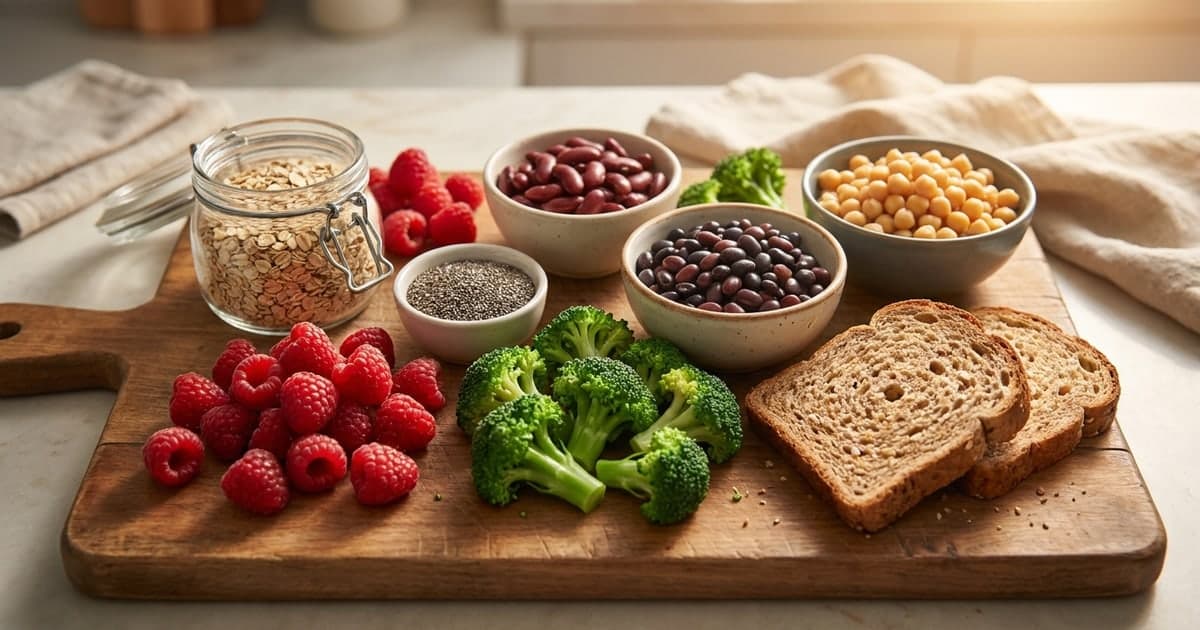
Highest-fiber foods (per 100 g)
| Food | Fiber per 100 g |
|---|---|
| Chia seeds | 34 g |
| Flax seeds | 27 g |
| Wheat bran | 42 g |
| Beans (cooked, average) | 8 g |
| Lentils (cooked) | 8 g |
| Chickpeas (cooked) | 8 g |
| Oats (dry) | 11 g |
| Almonds | 12 g |
| Avocado | 7 g |
| Raspberries | 6.5 g |
| Pears (with skin) | 3 g |
| Broccoli (cooked) | 3.3 g |
| Sweet potato (with skin) | 3 g |
| Brown rice (cooked) | 1.8 g |
| Apple (with skin) | 2.4 g |
A "30 g fiber day" template
Most people can hit 30 g of fiber with these inclusions, no overhaul needed:
| Meal | Fiber |
|---|---|
| Oatmeal (50 g dry oats) + berries (100 g) + ground flax (1 tbsp) | 8 g |
| Lunch with mixed salad, grilled chicken, avocado, balsamic | 7 g |
| Snack: 1 apple with skin + 30 g almonds | 6 g |
| Dinner: 150 g salmon + roasted vegetables (broccoli, cauliflower) + 100 g brown rice | 9 g |
Total: ~30 g. No fiber supplements, no grim "fiber bar" sacrifice.
The fiber-supplement question
Whole foods beat supplements for fiber, but supplementing has a place:
- Psyllium husk: well-studied, 5 g per dose, strong soluble fiber profile. Useful if you can't get there from food.
- Inulin / chicory root: prebiotic fiber, found in fortified foods. Can cause gas at high intake — start low.
- Glucomannan: very high water-binding capacity. Used in shirataki noodles. Effective for satiety.
- Wheat bran: cheap, effective, mostly insoluble. Adds 5–10 g fiber per 30 g serving.
If you're stuck in the 15 g range and can't seem to add whole-food sources, 5–10 g of supplemental psyllium per day is a reasonable bridge.
Fiber and the calorie deficit
The math: if you increase fiber from 15 g/day to 30 g/day, you increase satiety enough that most people can sustain a 200–400 kcal deficit they couldn't before. Over a 12-week cut, that's the difference between losing 4 kg and 7.
Fiber doesn't cause weight loss directly. It makes the deficit possible.
Practical rules
- Eat the skin when you eat fruits and vegetables. Most fiber lives in the skin.
- Add legumes 2–3 times per week as a side or main. Cheap, high fiber, complete-ish protein.
- Default to whole grains over refined when possible. Oats > instant cereals; brown rice > white rice; whole-grain bread > white bread.
- Add a tablespoon of seeds (chia, flax) to one meal per day. ~5 g fiber for almost no effort.
- Vegetables fill the plate. Aim for half your plate to be non-starchy vegetables at lunch and dinner.
What to do this week
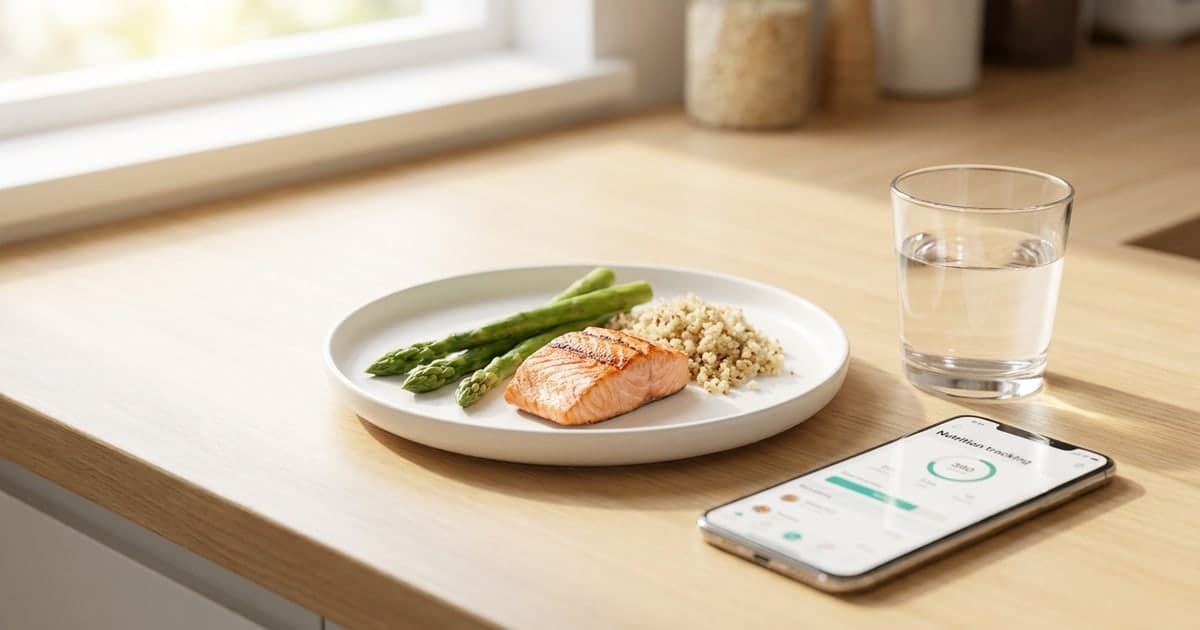
- Track your current fiber intake for 3 days. Most people are surprised how low it is.
- Add one of: a tablespoon of chia or flax seeds, a serving of legumes, or an extra serving of vegetables. To one meal per day.
- After two weeks, retrack. Aim for ≥25 g/day if female, ≥35 g/day if male.
If you've been counting calories without counting fiber, fiber is probably the lever you've been missing. The cuts that fail because of constant hunger almost always have a fiber gap. Fix that and the rest gets easier.
Ready to track smarter?
Snap a photo, get your calories, macros, and Health Score instantly. See what other trackers miss.
Download Calsy — It's Free